
By Shannon and Joy at the Southern Schoolhouse
Disclosure: This post may contain affiliate links, meaning we get a small commission if you decide to make a purchase through our links, at no cost to you.
Over the years, I have definitely noticed an increase in sensory needs among all children and even adults. I know there are a variety of reasons for this increase, but for this article, we want to share some of the sensory tools that have been used in our classrooms and have helped with engagement and regulation.
We have learned that every student is different and what is effective for one may not work for another. It is important to try different items to see which provides the best outcome. It is also important to provide a variety of items in your sensory boxes, especially if multiple students are using it or if it is being provided for a classroom. Here you can find more information on how to create sensory boxes.
Joy has a student that she meets at car riders each morning to support his transition into school. After trying multiple objects, the Schylling Needoh Nice Cube was a success for him. The input of squeezing, plus the firmness of the cube, provides a calming activity that helps to regulate the student and decrease his anxiety with transitions.
There is another student in one of my groups that prefers the back and forth motion of the Gooyoobz Originals- Sensory Tube or the Morf Fidget Worm Toy. The sensory tubes provide a distraction from anxious thoughts or disrupts escalation. You can even “play a game,” in which you squeeze one side and your student squeezes the other. This helps to change the student’s focus and can help to bring back regulation.
After an escalated incident, one student utilizes the therapy putty with charms. There are lots of different theme types you can purchase. After pulling and pressing to find the hidden objects, it brings him to a calm state, again providing that distraction and deep pressure input.
Sensory objects are not just for high needs. Just the other day one of my 5th graders was looking through the sensory box in my room. He chose the flow ring and loves how it feels when he lets it flow from arm to arm.
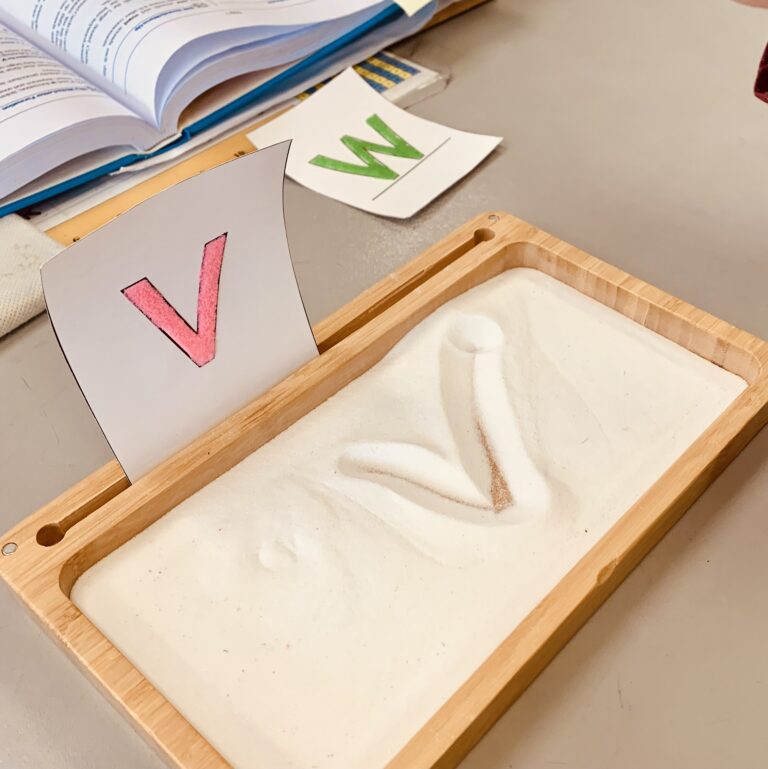
Even with the pre-k and kindergarteners, this sensory pad is a tool for learning as well as supplying the calming input little ones need to stay focused.
As Shannon states above, sensory items are very important tools we use daily. In fact, in my classroom, I actually call them tools. I tell the children, “This is a tool, not a trap, If I see it is a trap for your attention, it will need to be put away.” These sensory tools are not only used to increase attention, but also help with regulation.
Learning to regulate your body and emotions is a skill we teach frequently. We enable the children with not only sensory tools, but intrinsic tools. Using the sensory items alongside modeling, social skills lessons, and consistent routines will decrease unexpected behaviors and increase engagement. The tools mentioned above are “the favorites.” In fact, I often notice myself carrying the Schylling Needoh Nice Cube or a similar set of stress cubes around in my hand as I teach or walk around my classroom. For more information on how I incorporate these sensory tools into my daily classroom routine, see my article “Tools not Traps.”






2 Responses