By Joy from the Southern Schoolhouse
Collecting behavior data can be daunting. Whether you need the data for day to day monitoring, progress reports, or a BIP, it is important to have accurate and easy to gather data.
Daily Behavior Sheets:
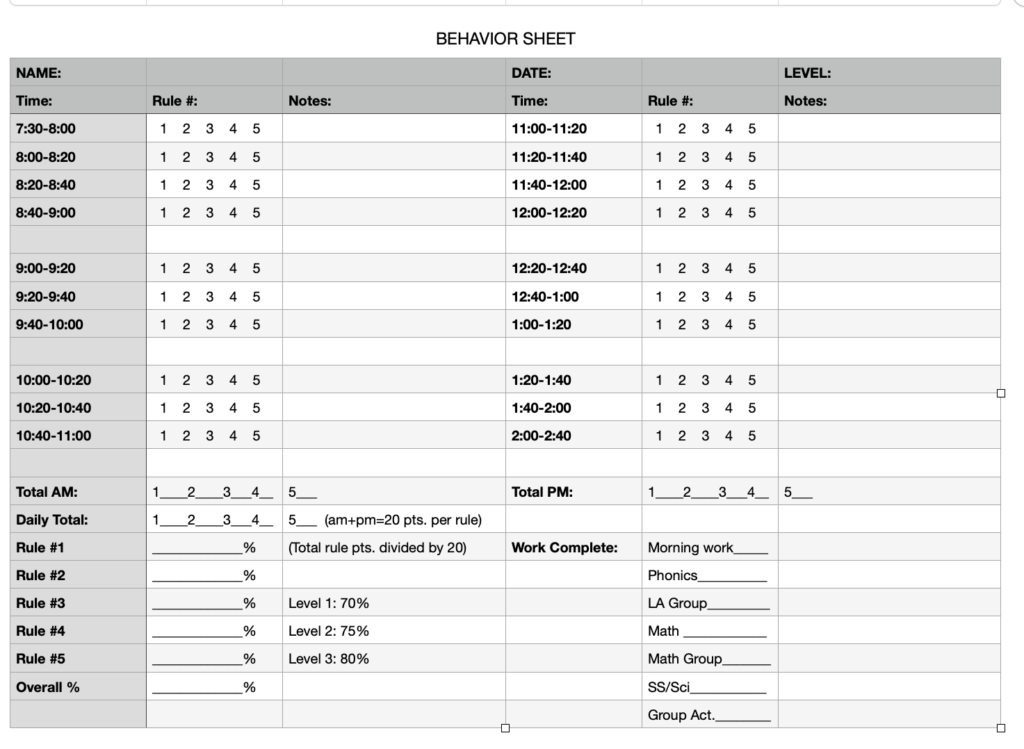
These daily sheets are my go-to for data collection when working with intensive behavior needs. I first began using these during student teaching and carried them into my time in the separate setting behavior class. Now I use them when intensive behavior needs arise within the resource setting.
The behavior sheets I use for the resource room are composed of three goals and are broken up in time segments throughout the day, with all five days on the sheet. This makes it easier for the regular and special education teacher to keep up with it.
For the therapeutic classroom, I used one sheet per day. This gave me more space to document. Below are two examples I have used, but these can be adjusted to meet your classroom needs.
Daily Behavior Sheet Example:
Weekly Behavior Sheet Example:
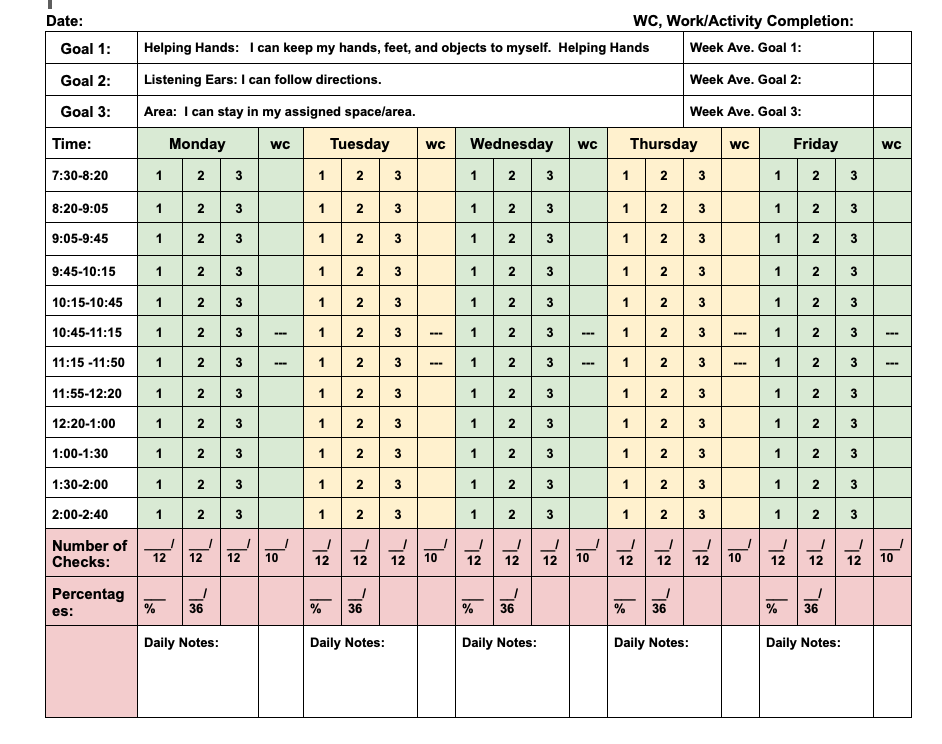
When creating your sheets, stick to 3-5 positively worded goals or rules. Make sure these correspond directly to the student’s individualized needs. This data can then be quickly turned into daily and weekly percentages to track student IEP and/or Behavior Intervention Plan goals. Also remember when calculating percentages, it is always best practice to figure the positive. For example Johnny was able to stay in his area 80% of the day, is better wording than Johnny was out of his seat 20% of the day.
Observational Behavior Data:
To help organize my data, I add an additional tab to my digital data sheets to track observations as well as strategies used during behavior data collection times. This is a great place to add information during the BIP process. I include a date and also color code the entries. For example I use red for physical aggression, muted yellow for strategies tried or added, and another color for communication. This is also a great place to track suspensions or other disciplinary actions. Since this data is digital, I also link in other documents or visuals to have quick access.

In the past, prior to my digital data sheets, I just grabbed a spiral notebook to document behavior events each day. Either way, observational data is a must have when documenting behaviors.
Google Forms to track Behavior Data:
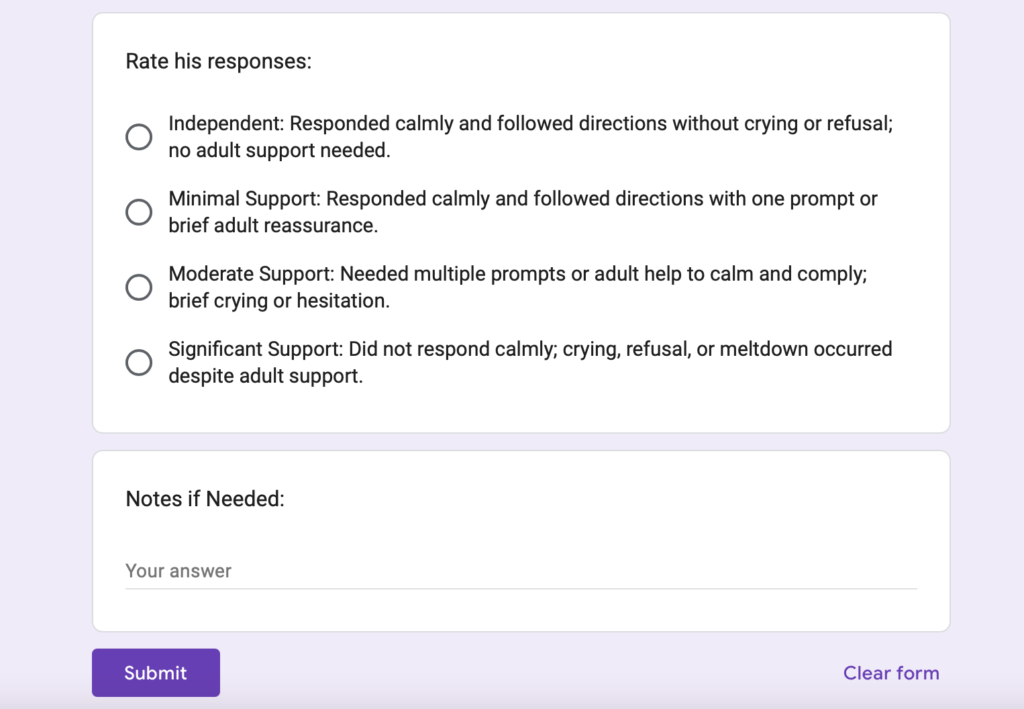
Recently I have used a google form to help track and document behaviors. This is a perfect tool to send to school staff or the regular education teacher. Their responses are automatically added to a spreadsheet that includes a time stamp. You can tailor the questions in the form to correlate with the child’s IEP goals to help better inform present levels and progress. This form is best sent weekly or it will get forgotten. You can also create a QR code to have for the teacher’s reference. When scanned the form will automatically pull up.
Educator’s Handbook:
If your school has this tool, it is important for all staff to input behavior incidents. When larger incidents are documented, better programming decisions can be made. If your school system has alternative means for documenting, please do so diligently. Remember if it isn’t documented, then it hasn’t happened (even though we all know it did!).
These systems, especially combined, will give you excellent behavior data to inform goals, Present Levels, BIP progress, Present Levels, and Placement Decisions. Now get to documenting, you can do it!