By Joy at the Southern Schoolhouse
Disclosure: This post may contain affiliate links, meaning we get a small commission if you decide to make a purchase through our links, at no cost to you.
A calming center is a must for all elementary and special education classrooms. This designated space comes with many names: quiet corner, calm down corner, chill zone etc but they all serve the same purpose, Emotional Regulation.
In my classroom, I have two designated spaces set aside for calming. They are located in opposite corners of the classroom. They are designed with different purposes in mind.
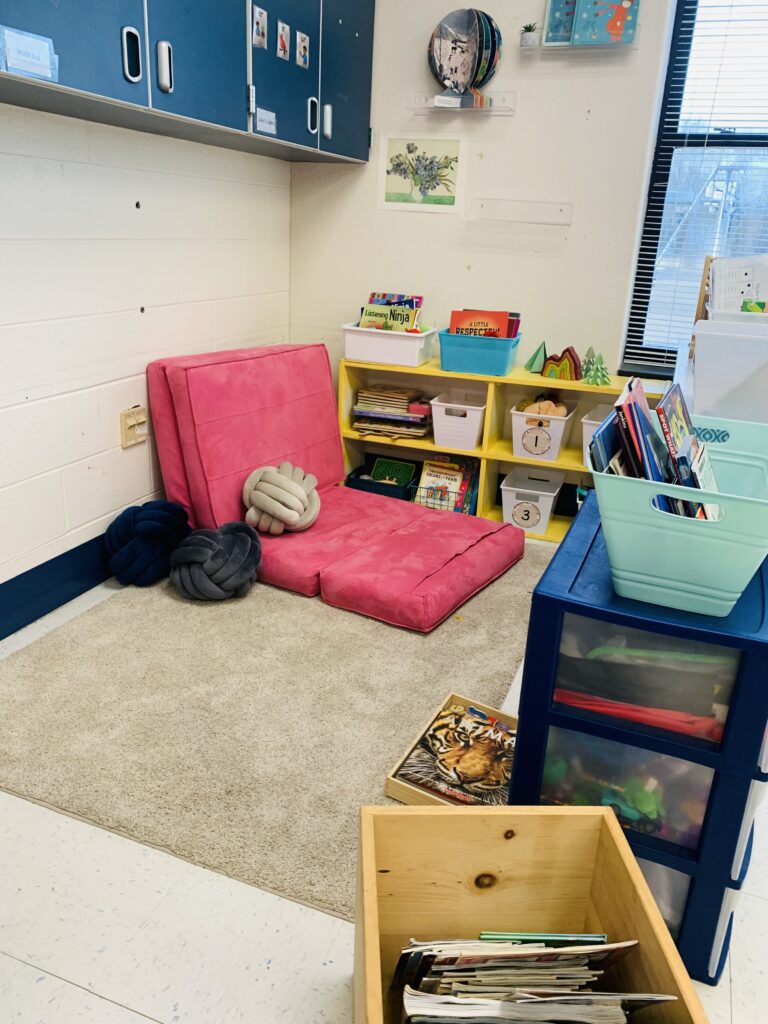
Corner 1: Peaceful Work
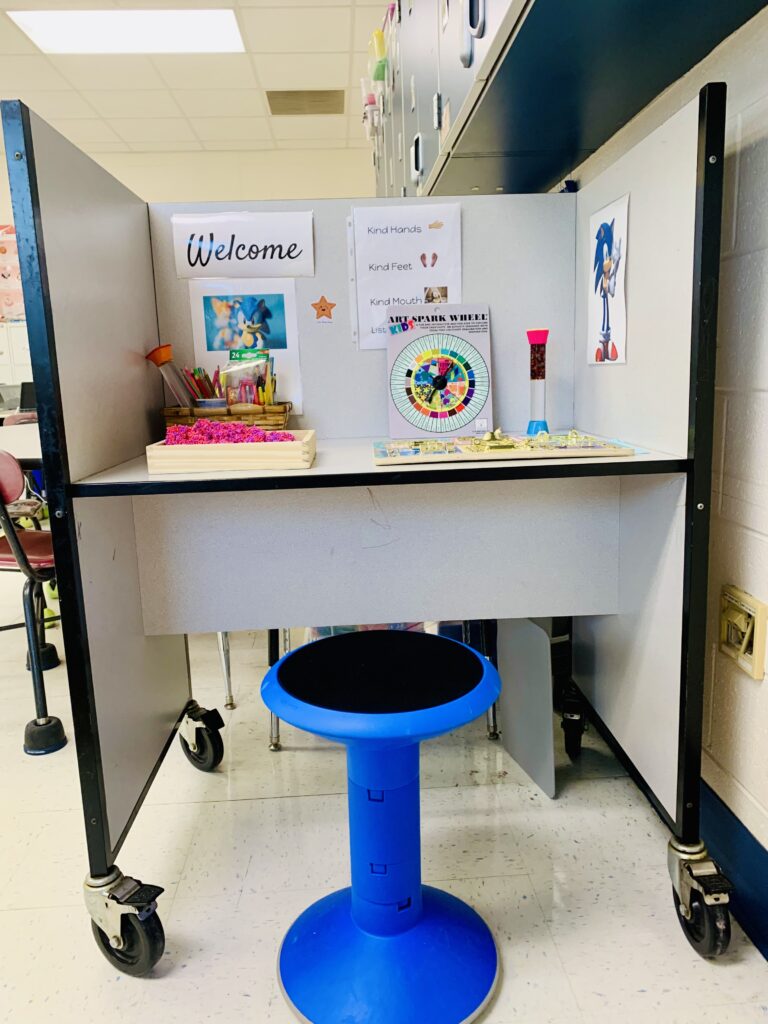
This corner is designed around a cubby. The cubby and bookshelves set it apart from the rest of the room. It includes a rug, comfy chair, pillows, books and sensory items. This area is used when a quieter work space is needed. The cubby includes drawing supplies, a wiggle seat, and visuals that remind a student about our rules or breathing strategies. The cubby can easily be cleared to work on classroom assignments. It is helpful to drown out the sounds and distractions from the other learning spaces.
The rug and comfy floor chair can be used to work on our learning apps, read, or hang quietly with a friend when the test or work is complete. Sensory tools and the quiet, comfortable surroundings provide additional input and serene. This entire corner makes a perfect space for a child who needs a little down time or is over-stimulated. This provides a safe quiet space to get more centered. This type of area would be most appropriate for the general education classroom.
Corner 2: De-escalation
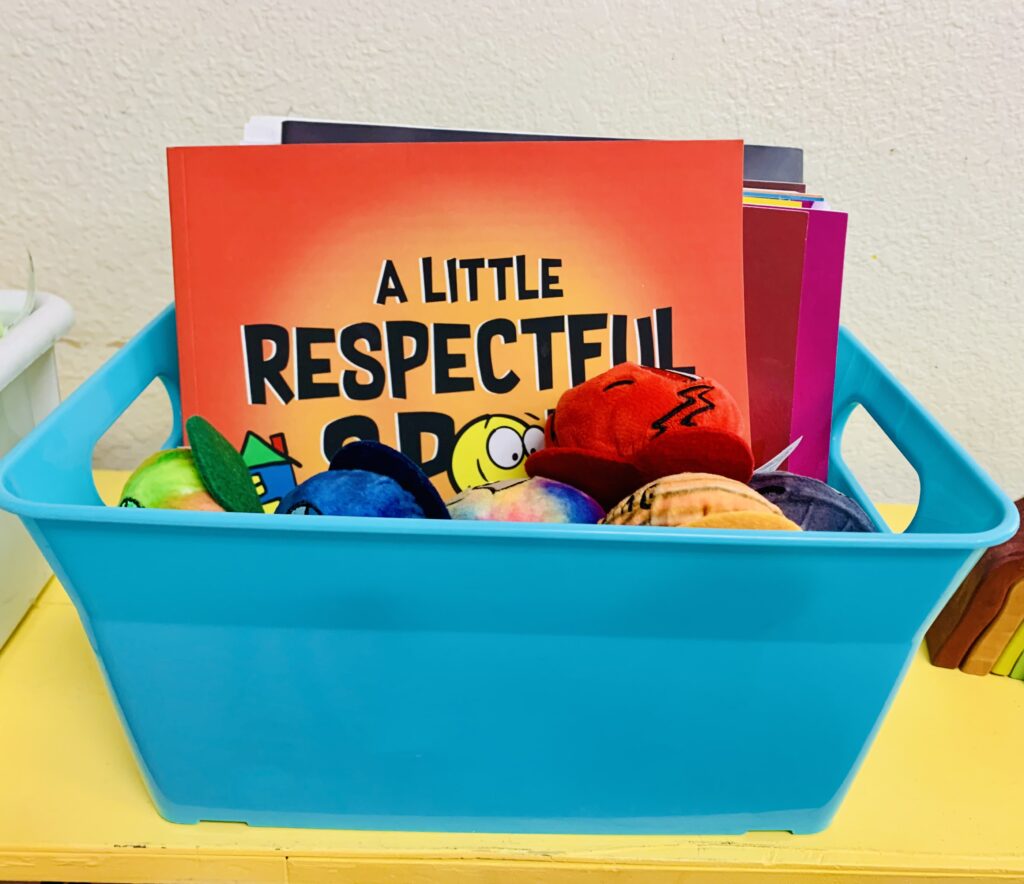
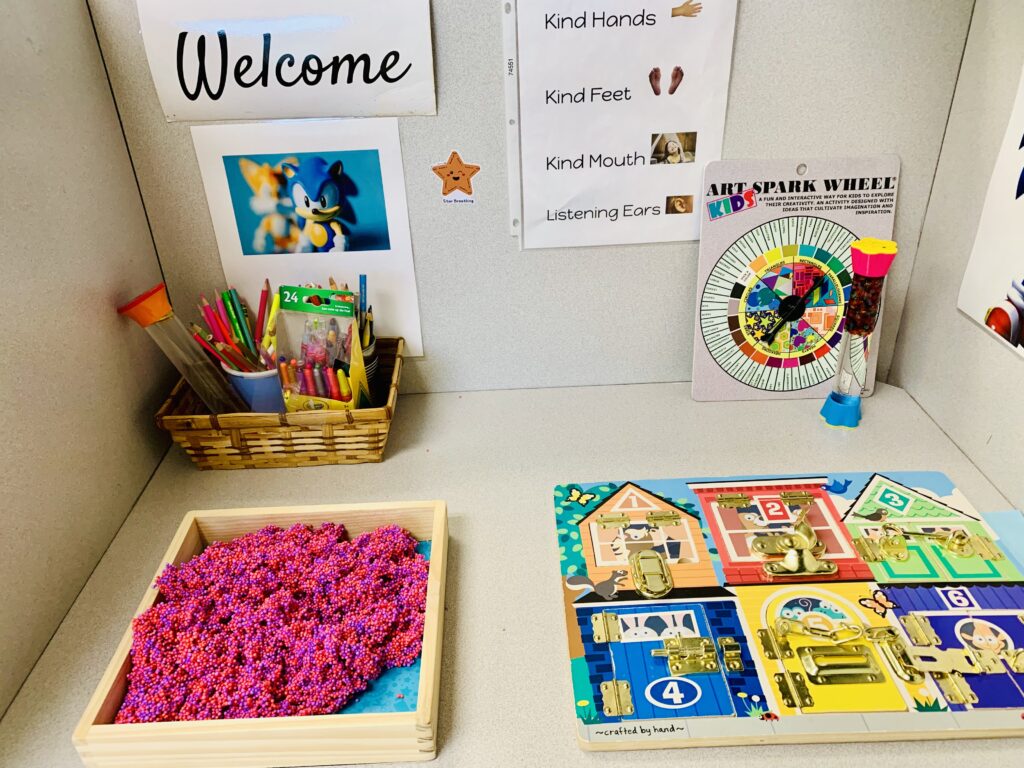
This corner can also be used like the one described above, but is designed for breaking the escalation cycle. The corner is padded. It includes a bean bag, timer, moveable furniture, sensory bin, visuals for calming, and tools for de-escalating. These are kept in separate bins for easy teacher access.
De-escalation tools for your corner:
- Bean bag chair
- Foldable Pads for the flooring or walls
- Cut out handprints on the wall for wall pushes
- Stretchy bands for pulling
- Weights for “heavy work”
- Weighted soft items for holding, or tossing
- Yoga ball
- Visual “Tool” menu; or make your own
- Think Sheets to process the incident-Make these age appropriate, TPT has free options
- Books to process feelings and positive strategies
- Low Lighting, Soft Music and Timer
Sensory items for your corner:
- Sensory Cube
- Stress Balls
- Flow Rings provide a distraction and squeezing arm input
- Putty-This provides good squeezing input for the hands
- Sensory Cylinders
- Bubblers
- Noise Canceling Headphones
- Sequin Wall
- Sequin Pillow
- Soft Stuffed Animals (see more here)