
Exploring the Heart of the Nation: A D.C. Field Trip Adventure!

Our nation’s capital is a wonderful place to take a field trip. This was my son’s first overnight trip with our school and my husband and I both had the privilege of chaperoning.
Field Trip Planning and Prep that Leads to Success Part 1
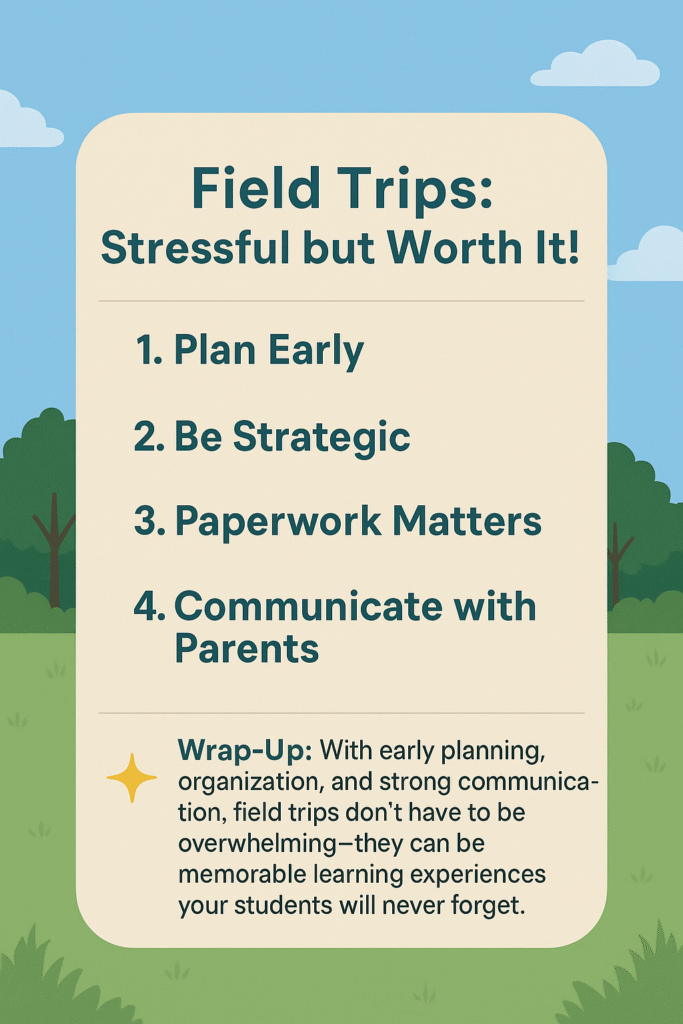
Field trips – they’re one of those things that can bring a mix of excitement and anxiety for both teachers and students. While they might seem like a lot of work and stress, they offer opportunities some students might never experience otherwise. So, even though planning them can be daunting, we do it because they’re worth it. Over the years, I’ve learned a few tips and tricks that can make the process smoother. Here’s what I’ve picked up when it comes to planning successful field trips.
ABC Adventures: Fun Learning for Young Minds!

Exposure to the ABC alphabet books supports building a foundation for early literacy and language development.
Expert Tips for National Boards-Setting up a System

Trying for National Boards is challenging. Here are some of the steps I took prior to submission to make the process smoother.
Stress-Free Sub Plans: Easy Tips for a Smooth Classroom Takeover

A day off for a teacher is not easy. There is so much that goes into planning for a sub. This article, will provide a few simple things you can do to make taking a day off a little easier.
Teacher Travels: Adventures Beyond the Classroom

Travel volleyball takes us all over the place. Recently, we flew to St. Louis, Missouri.
Top Tips for Substitutes to Ensure a Successful Day in the Classroom
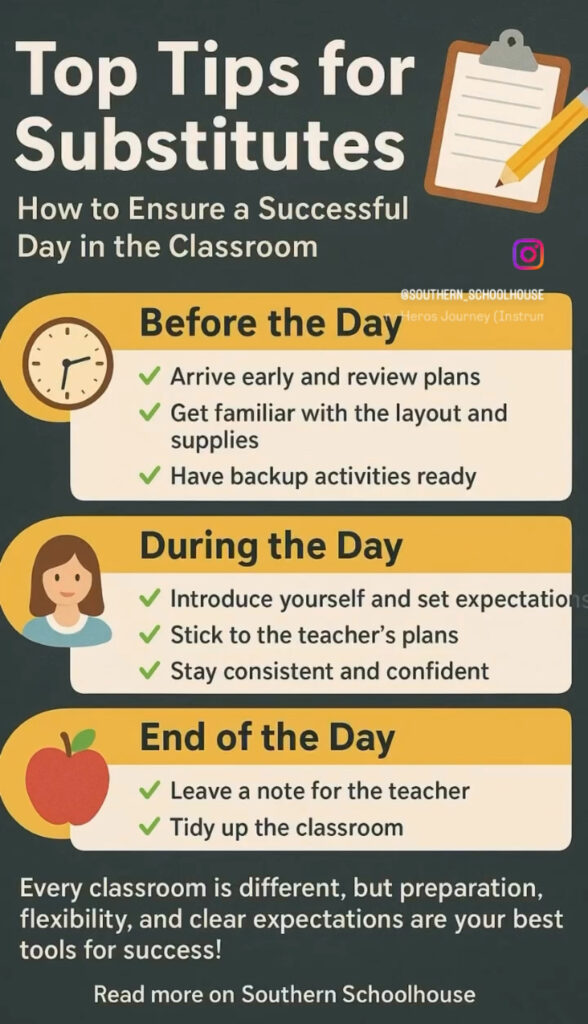
Being a substitute is not easy. Unless you are completing a long-term sub position for a teacher, every assignment can be a challenge, a new grade, a different school, and a set of students that you are not familiar with.
The Magic of Weighted Plush Toys and Blankets
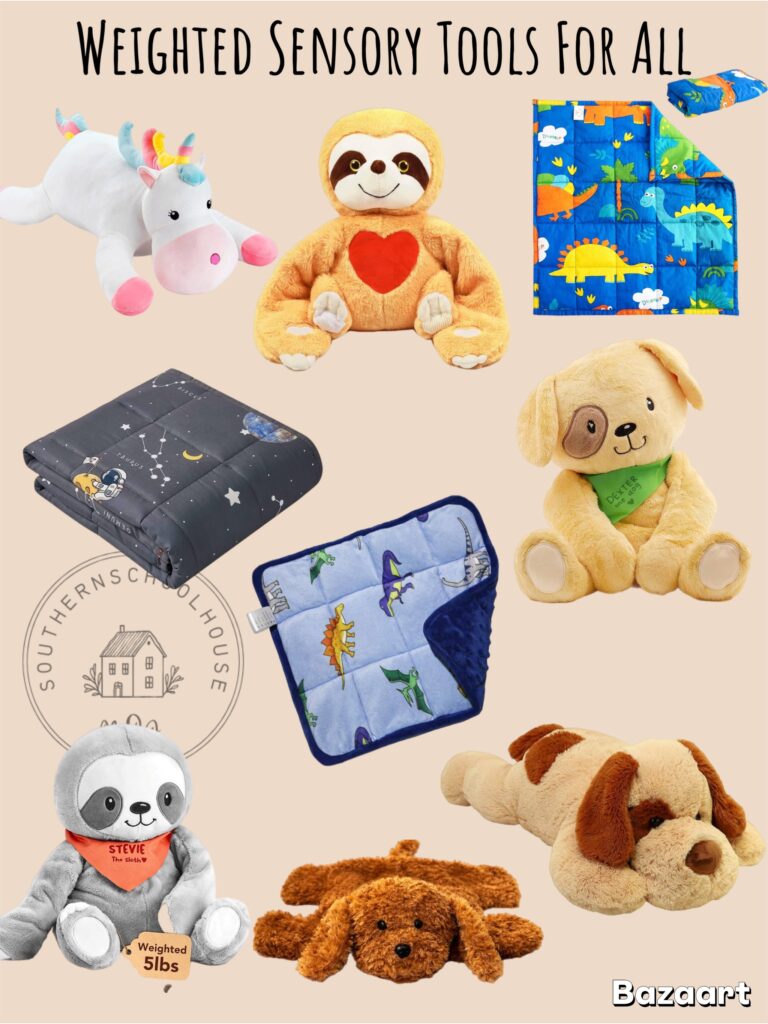
Weighted plush toys and blankets are a comforting solution for those with sensory needs, providing gentle pressure that promotes relaxation and calmness.
Field Day: How to Strive, Thrive and Have Fun
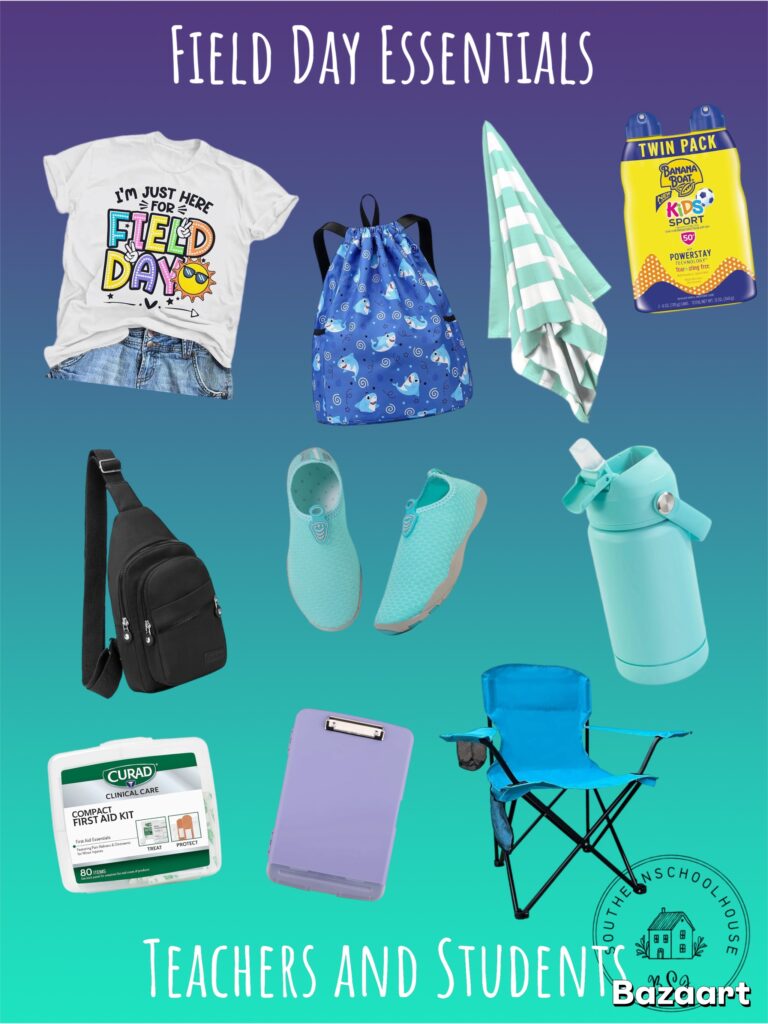
If you are a teacher preparing for field day, your role is to make sure things are organized and ensure students are safe while having fun.
The Perfect Book Series for Little Ones

The Little Blue Truck book series is a sweet and fun collection of stories about a cheerful blue truck and his animal friends.
Easy Closet Makeover Without Any Drilling

My youngest daughter is my kind hearted, funny kid, but when it comes to keeping her things tidy, that is not a strength. She likes to collect artificial plants, rocks and so many other small knick knack items. We do bedroom clean outs usually every year before Christmas. The room is small, and each year, it tends to need a little organizational TLC.
Organizing Paperwork in the Special Education Classroom

Whether you’re in a regular education or special education classroom, paperwork is a constant part of the job, and it can sometimes feel overwhelming.
Teaching Character Analysis- Book Suggestions
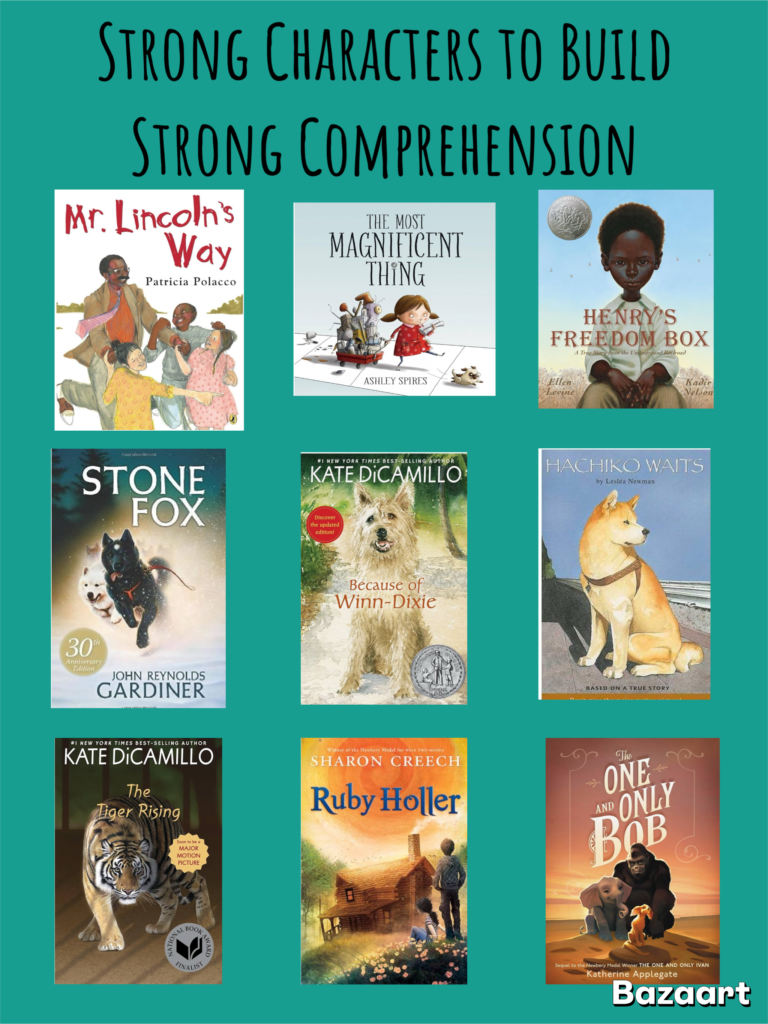
Teaching Character Analysis- Book Suggestions
Create a Calming Center for your Classroom
A calming center is a must for all elementary and special education classrooms. This designated space comes with many names: quiet corner, calm down corner, chill zone etc but they all serve the same purpose, Emotional Regulation.
Teaching Character Analysis-Tips and Resources

“The main character is NICE….” How many times have you received that response to a question about the main character of a text you are reading?
The Power of Social Stories in Supporting Children
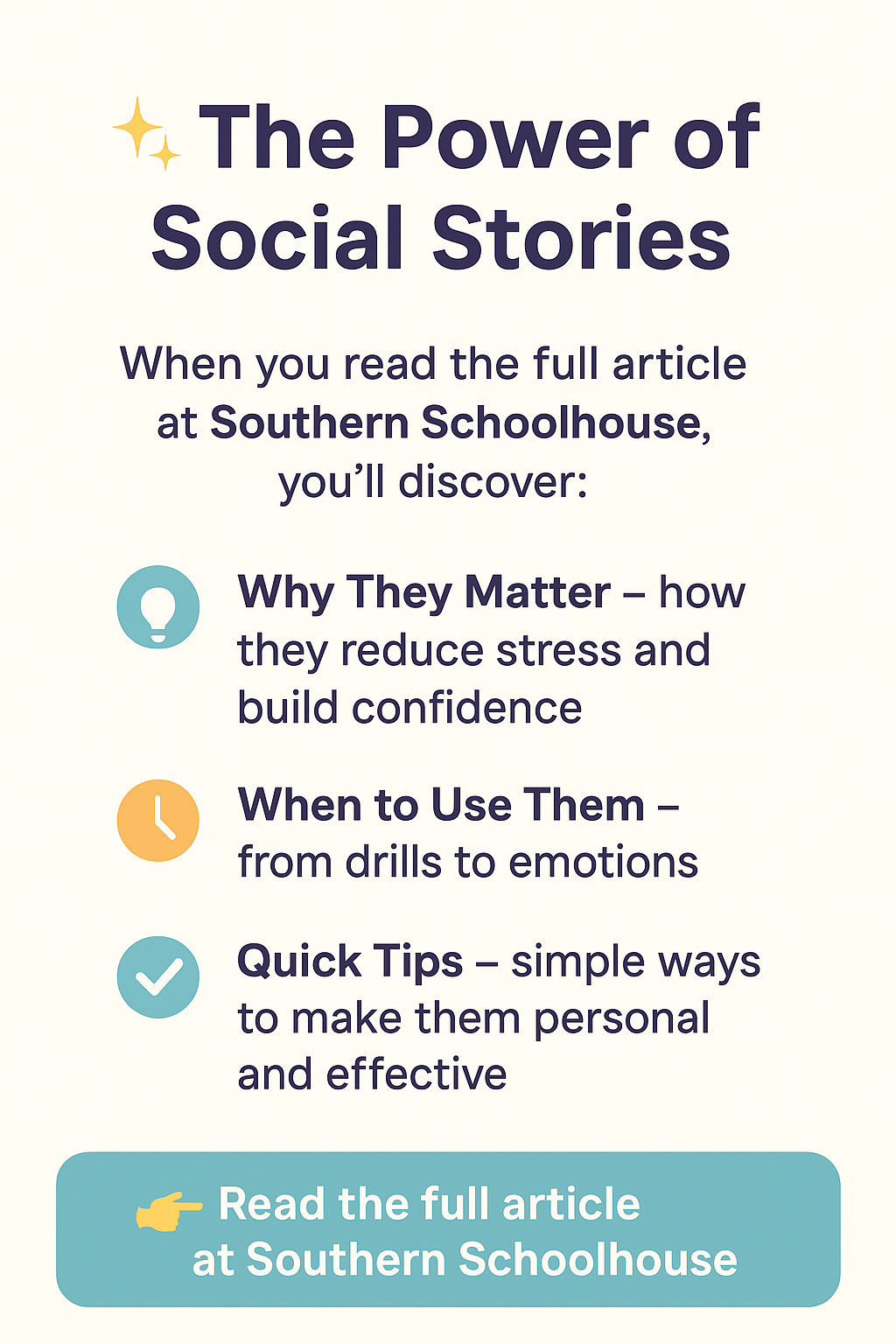
When I transitioned from being a general education teacher to an EC resource teacher, I had the privilege of teaching and supporting a special young man for three years. Diagnosed with autism, he quickly became near and dear to my heart. Over the course of those years, I watched him grow and mature, and it was incredibly rewarding to be a part of his academic and social-emotional development. In many ways, I feel he taught me more than I ever taught him.
Hands on Sensory Play Equals A World of Fun!
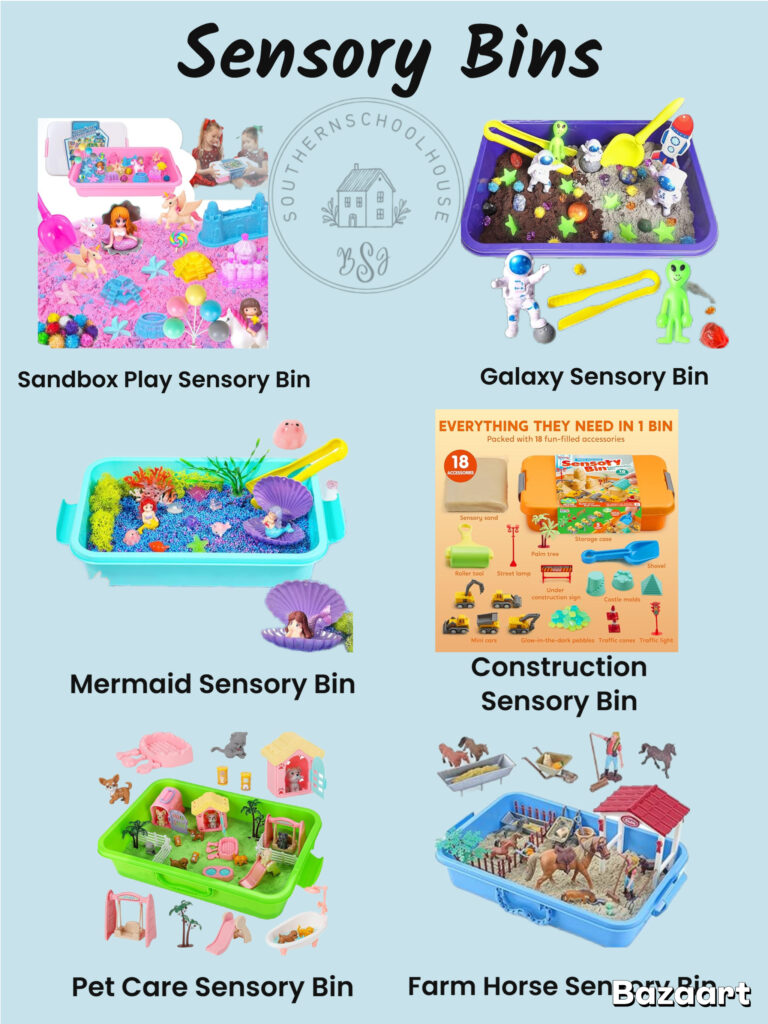
Sensory bins are excellent tools for engaging multiple senses, which help enhance sensory processing and overall development. They provide a hands on experience that promote motor skills and creativity. These bins also encourage creative play and focus as they explore different textures, colors and objects. In addition, they can be calming and therapeutic, helping children regulate emotions during stress, frustration or overstimulation.
Easy Classroom Environmental Changes to Regulate and Curb Behavior
Environment manipulation is one of the easiest ways you can curb unwanted behavior and encourage emotional regulation.
Wear Your Passion: Apparel for Specialty Area Teachers
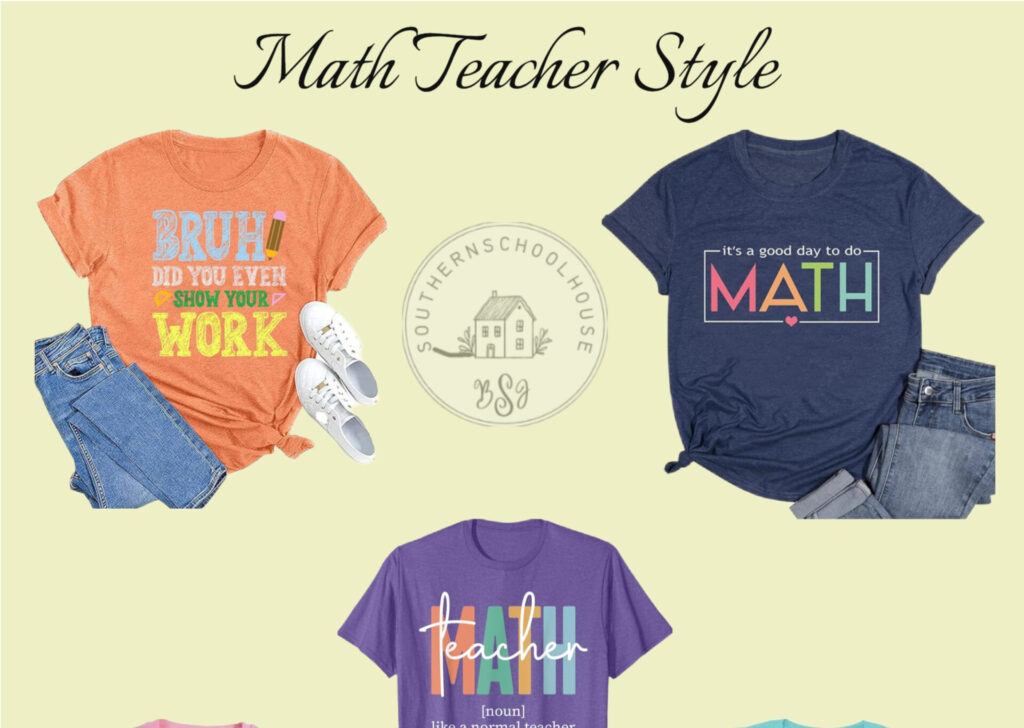
Themed shirts have become a popular trend at our school, with teachers showcasing unique shirts for holidays like Halloween, Christmas, St. Patrick’s Day, and more. Now, we’re introducing everyday shirts designed just for our specialty area teachers! These shirts let Art, Music, PE, Reading, and Math teachers show their school spirit and add a fun, personal touch to their wardrobe all year round.
Classroom Management – Start with the Small Stuff

Let me be honest – classroom management has never been my strong suit. I am soft! I admit it! As a young teacher I loved my students and I just wanted them to “like” me. I couldn’t be “mean”. Big mistake! I am also soft spoken so getting students to “hear” me was difficult. Being tough just didn’t come naturally, but slowly year after year I learned and improved.
Tracking Success: Using Data Collection to Monitor Student Behavior

In education, the term “data” is often heard throughout the day. In the early childhood (EC) world, “data” is especially emphasized when discussing students involved in the referral process, reevaluations, annual IEPs (Individualized Education Programs) and behavior intervention plans (BIPs). This article will focus on how to create a daily data collection sheet for students with a BIP.
Managing Reading Rotations and Small Groups: A Guide for Teachers

As I have observed and discussed with my various mentees over the past few years, managing reading rotations and small groups in the classroom has been a recurring topic of conversation. Every teacher has different styles and ways to organize and manage their classroom. I’ve learned that routines and consistency do not always come easily. In this article, I will provide an example of how to structure and organize your daily reading rotations.
Teacher Tested Sneakers, Pain No More!

Walking and standing on the school’s tile floor and putting style over comfort, led to knee and hip pain. Wearing shoes with no support had to be discarded as I switched my focus to supportive shoes. I invest in my shoes because it invests in my body. When I first put on my On Cloud Monsters, I could not believe the difference they made. I was actually able to run with no knee pain. I have had three past knee surgeries and thought running was a thing of the past. Although a higher price tag, I believe in the product and would highly recommend buying a pair. The following shoes have been tested by myself or my family. They are my top choices for teacher comfort sneakers and super cute too.
“Playful Paths to Reading: Hands-On Early Literacy Activities”
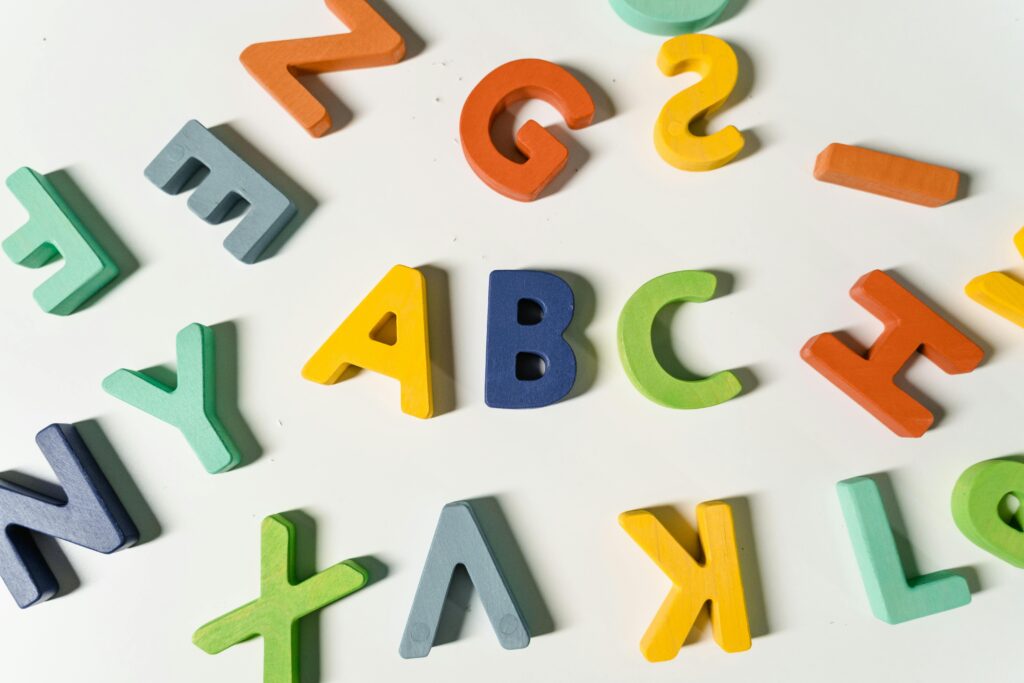
Hands-on early literacy activities is all about making early literacy development fun, interactive, and engaging for young children. I am sharing some tools and games that combines play with learning, giving children an opportunity to explore and practice literacy skills through interactive experiences.
Make Your Own Letter Formation Sand Tray and Letters

Prior to owning my sand tray. I used a plastic pencil box filled with a little salt or sand. I filled the entire bottom of the pencil box with about a half an inch of sand. These boxes were perfect due to the built-in lid.
How to Teach Letter Identification and Formation

Teaching letter identification and formation is a commonly taught skill in early grades and special education. All littles, including those with motor and attentional difficulties will benefit from a multi-sensory approach to learning this skill.
Favorite Chapter Books-Fantasy Genre for a Great Bedtime Routine

These highlighted series are my all time favorite fantasy read-alouds. The literary adventures have created many memories and childhood fun for my family and I hope to share them with you. Even my 22 year old will still cuddle up beside me while I read Harry Potter to his little brother. Happy adventuring…
Chapter Books for the Hesitant Reader

Most of my experience as a regular education teacher has been with the upper elementary students. As the students move into 3rd grade, they move towards reading chapter books instead of picture books. A pattern I noticed over the years is that students enjoy having that chapter book in hand whether they can actually read it or not. The thicker the better. Chapter books just become “the thing” when the students get into the upper grades.
Using Interactive Notebooks to Teach Reading and Writing

This is something new for me and I really love it! Have I used reading and writing notebooks in the past for my ELA instruction? Yes I have, but never as intentionally and consistently as I am using them now. Also I have never felt they have been as beneficial until this year.
Valentine Gift Ideas

Here are some small gift ideas (most $10 or less) that we wish were available when our older kids were smaller. A lot of them are fun sensory tools or hands on activities to enjoy during free time.
“It’s Time to Go!” How Morning Routines Save the Day
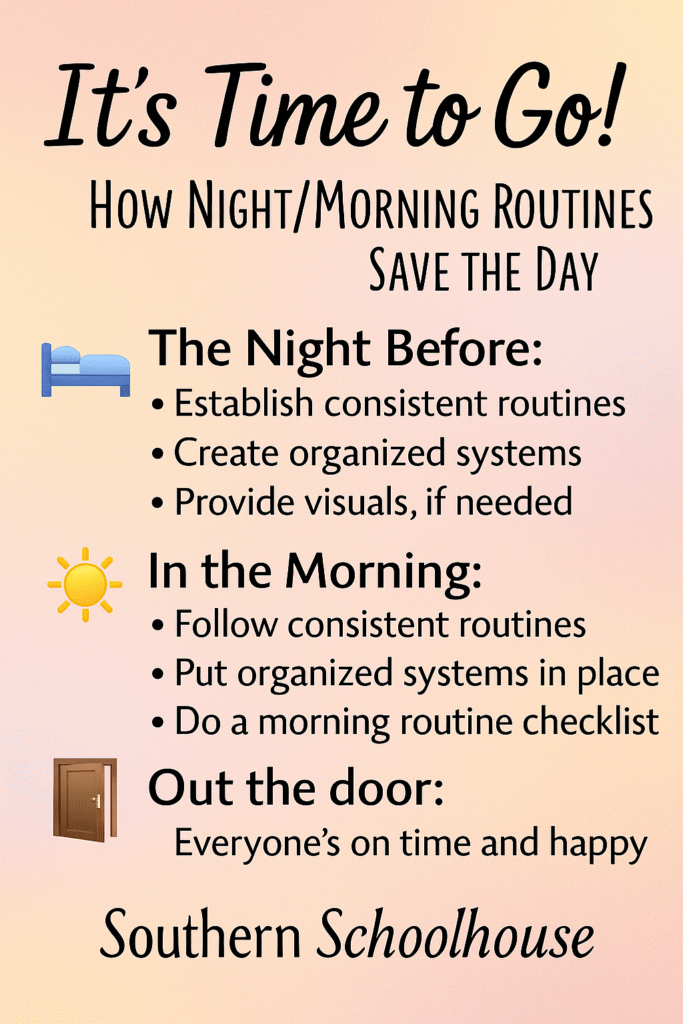
If you are a working mom or dad trying to get your children out the door in the mornings, you understand this title.
Valentine’s Day Treats
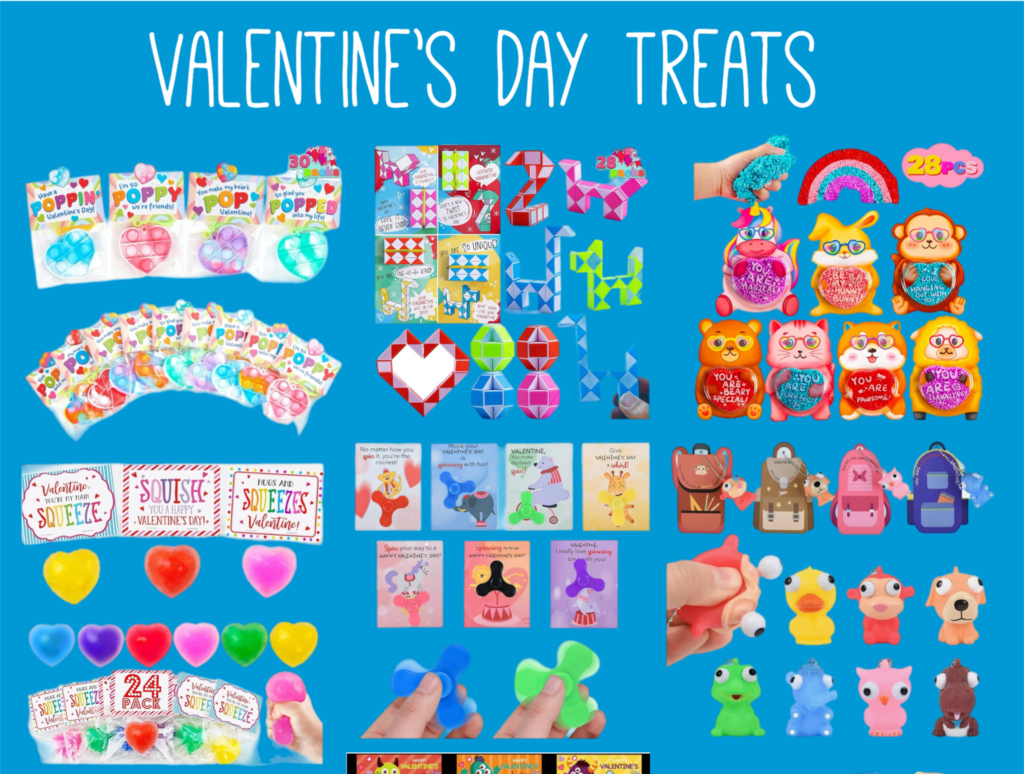
Most of these Valentine’s Day treats are sensory tools that help with stress relief. So many children and even adults have sensory needs and this small gift can be a helpful tool.
How our Homework Routine Saved my Sanity
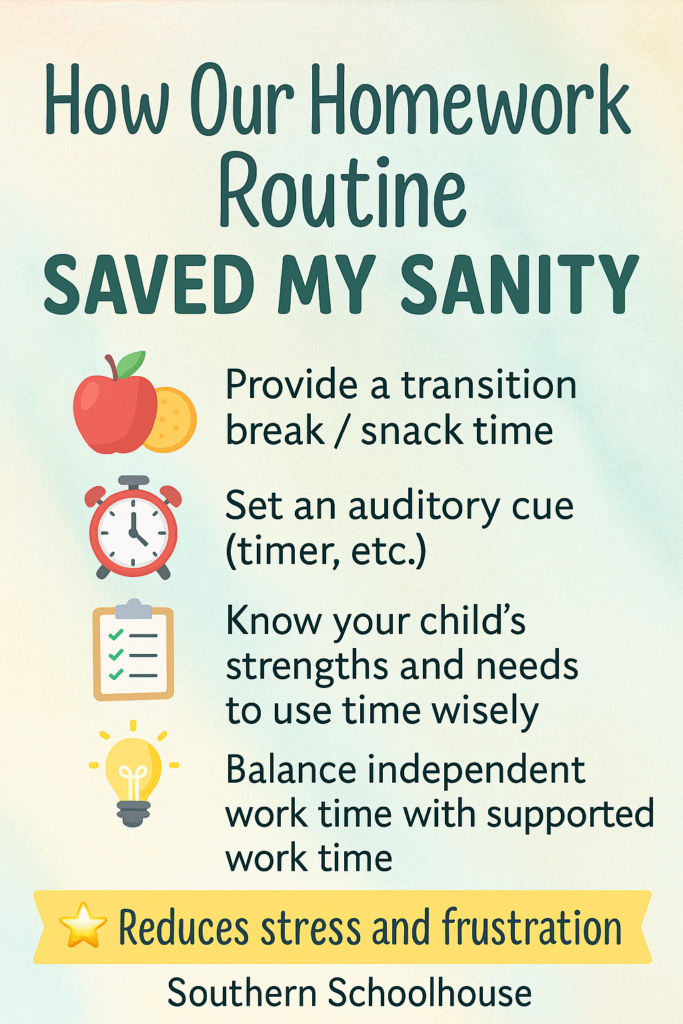
In my morning routine article, I told you a little bit about my son, Jayce. He was my easy going, laid back, big hearted child; but when it came to getting things complete, he waited until the last minute. Being the opposite, I thought I would lose my mind. When it came to homework and our busy schedules, I had to come up with a routine to make sure everything was completed. This article will explain how I managed to do that.
“Dirty Laundry, Dishes, and the Never-Ending Spin Cycle!”

When the kids were younger, it was hard to manage cleaning the house during the week. In the beginning, I would wait and do everything on Saturday. Then Sunday rolled around and I was preparing for the week. It was as if I didn’t even have a weekend break. My Saturday was consumed with cleaning, washing and folding a lot of clothes. My Sunday was spent preparing for the week. All of my kids were active in sports and dance. When Kayla started playing soccer, her games were played on Saturday. As a result, my all day cleaning did not happen. At that point, I knew I had to come up with a better plan that worked for my family. I decided that each day after work, I would choose something to do. Of course there were things that needed to be done daily such as the floors swept, dishes, etc. The other items, I decided would be separated and one completed each day.
Organizational Systems in Small Group Learning

In all aspects of teaching, it is important to be organized and ready for each transition. When I moved from the regular classroom to the EC resource position, I found that my organization had to look different. In this article, I am going to share how I organize my materials for the many transitions I have throughout my day. I know not every technique works for everyone and even after six years, it is still a work in progress.
Dynamic Collaboration: Team Teaching Through Rotating Stations

Joy and I are the only two resource teachers at our school. It has taken us a few years, as our EC (Exceptional Children) population has grown, to figure out ways to fit everyone into a schedule. Covering service time, as well as building in time for our transitions, is always a challenge.
Sensory Boxes: A World of Exploration in Every Touch

Sensory boxes are becoming a vital part of supporting our students’ social and emotional needs. Joy and I have put boxes together for several teachers, students and even for the administration at our school. A box is going to look different depending on the purpose of its use. The boxes for our principal and assistant principal have a variety of items because they work with multiple students daily across all grade levels.
”Finding the Right Gift for the Little Ones in my Life”

Now that our kids are older, I struggle trying to figure out what to get my niece, age 5 and my great nephew, age 2. What my kids liked 15-20 years ago is different than today. Both of their birthdays are in December and then there’s Christmas. Being an educator, I always enjoy buying books and learning toys. These are some gifts I have gotten over the past few years. Interactive toys and books to help fuel the imagination and their love for reading. If you are in a similar situation in which your kids are older but you now have younger children in the family, I hope this is helpful. These will work for grandchildren too!
Sensory Tools: Unlocking the Power of Play and Focus
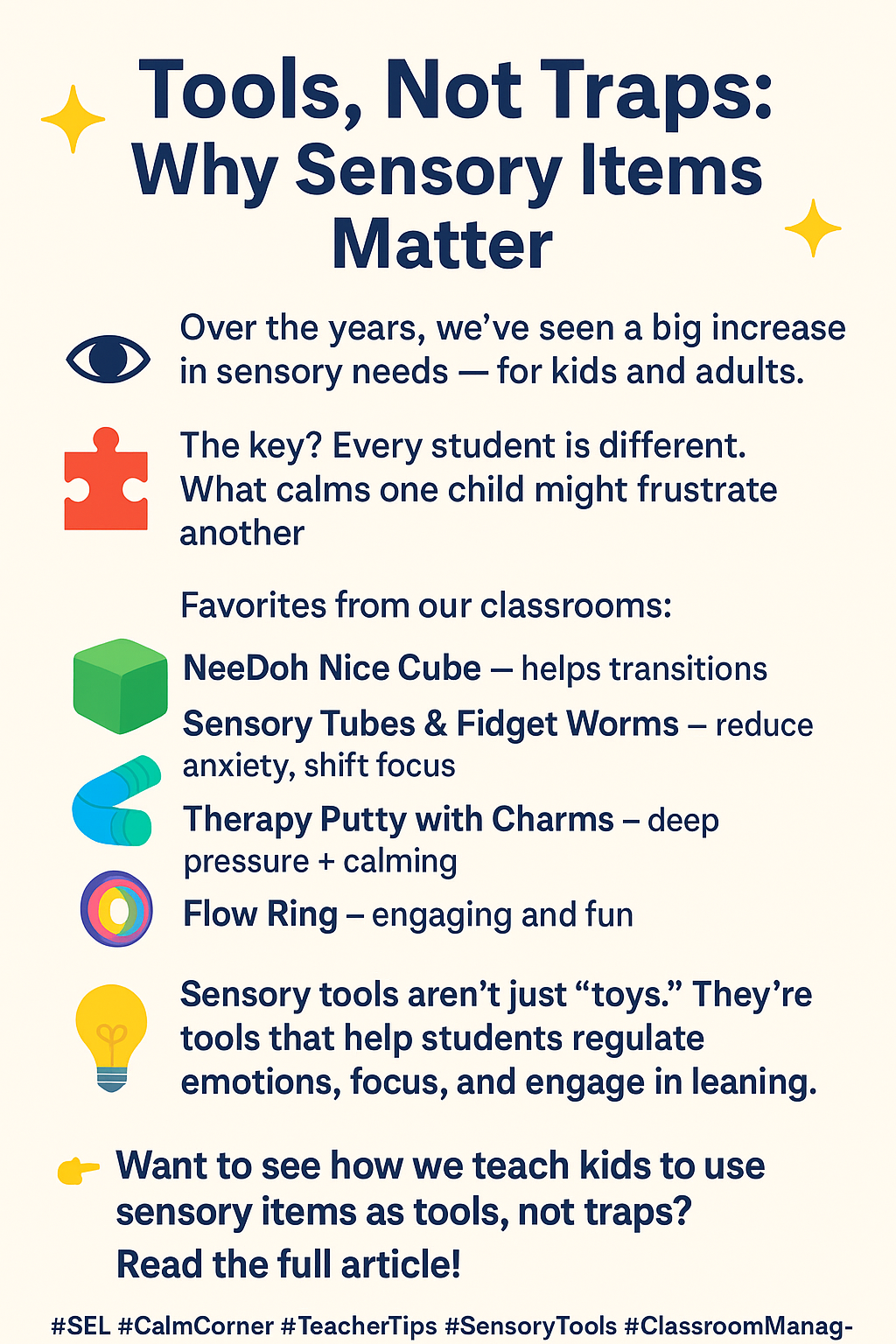
Over the years, I have definitely noticed an increase in sensory needs among all children and even adults. I know there are a variety of reasons for this increase, but for this article, we want to share some of the sensory tools that have been used in our classrooms and have helped with engagement and regulation.
Tools, Not Traps: Harnessing Sensory Items for Success
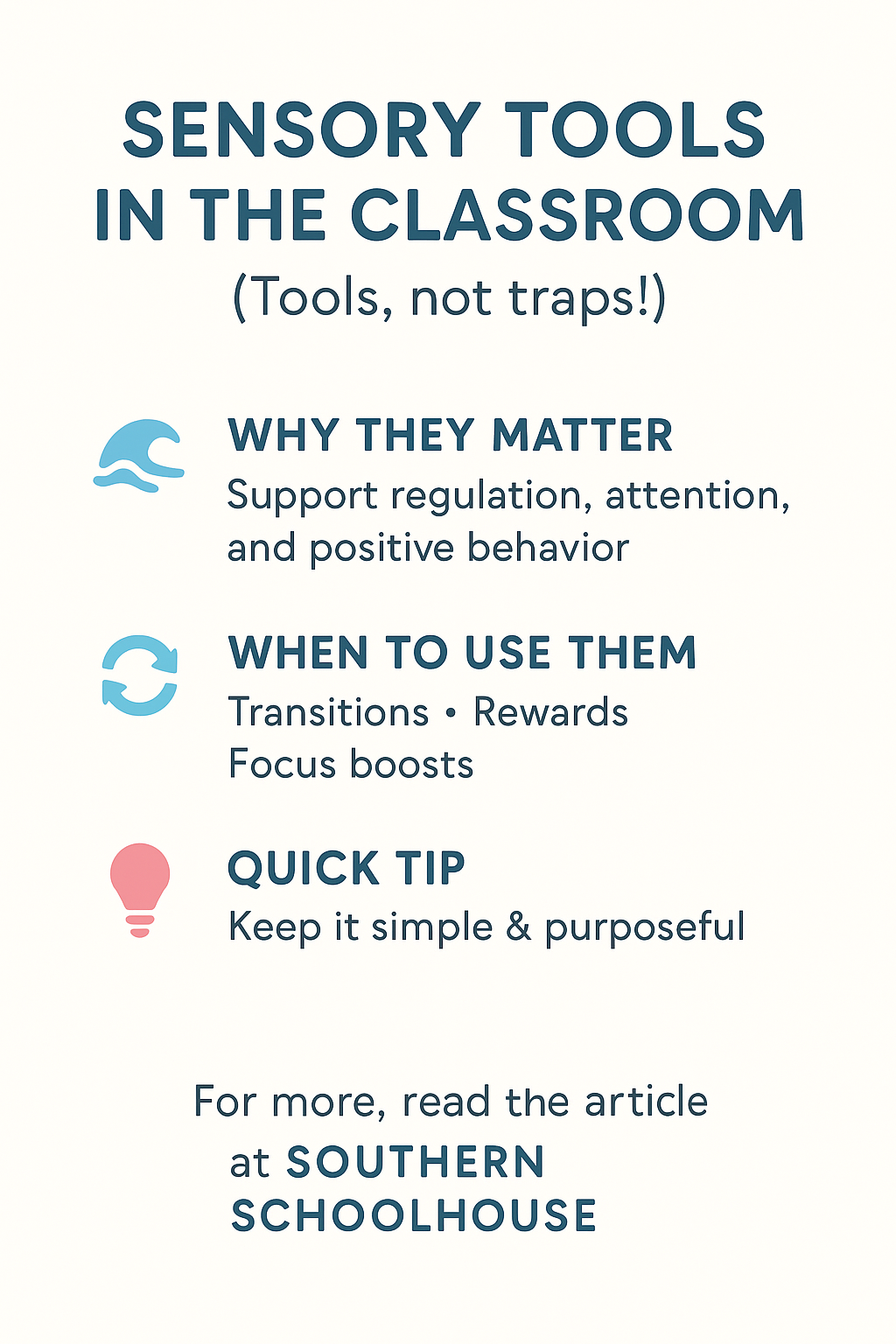
As a mother of four I have been blessed to see children grow through all developmental stages. Each child is different, but stages are similar. At each level and into adulthood, sensory input is important. It is how we learn, show and feel love, and regulate our emotions.
Sensory Seating: Creating Comfort and Focus for Every Learner
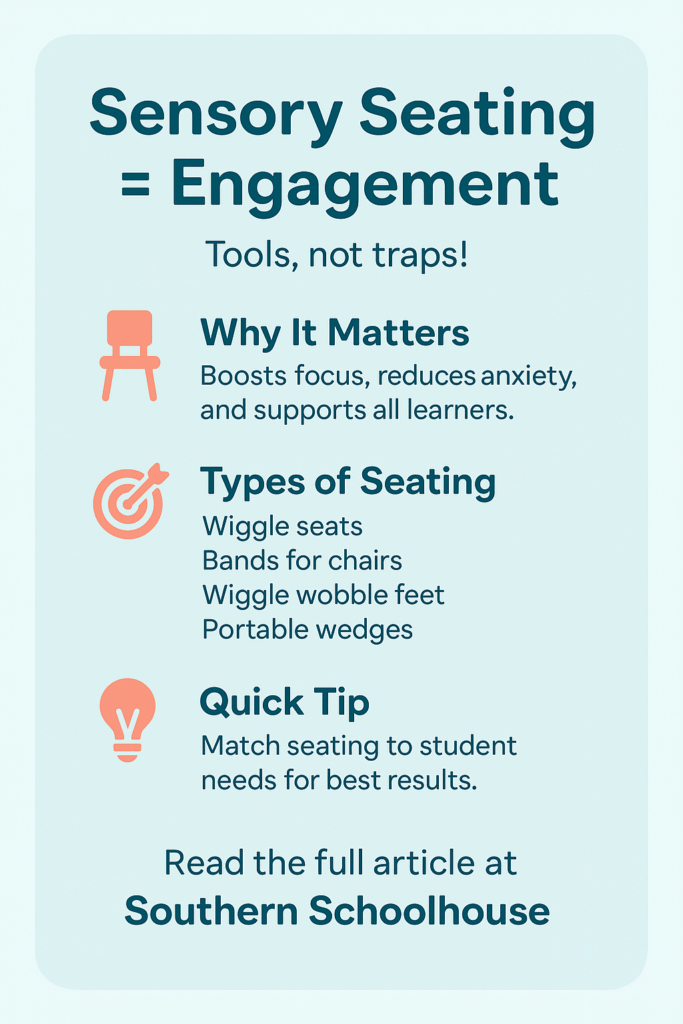
Sensory Seating increases engagement. It is an important set of tools that can help to improve the success of your learning environment. We love sensory seating. It can be strategically placed ahead of time for those students that you know need extra sensory input and wiggle time.
Math Made Fun: Unlocking Learning with Hands-On Tools
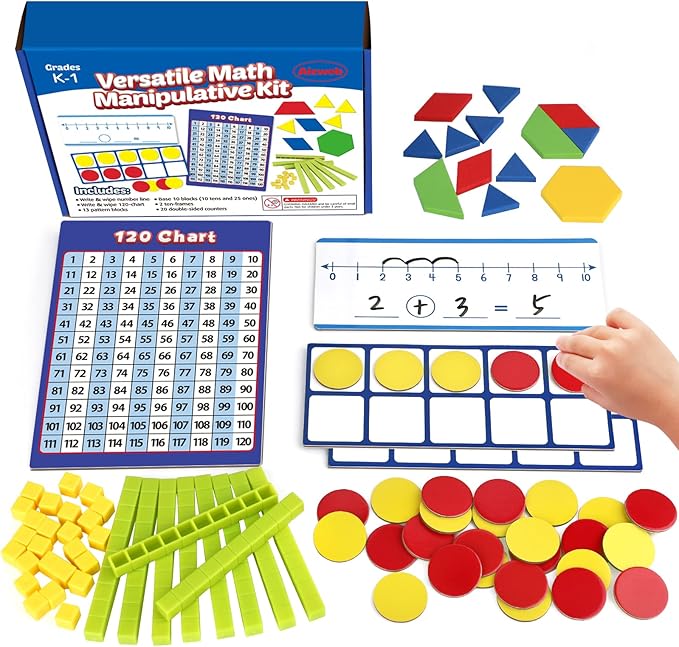
Over the past 5 years, I have obtained different hands-on math items that have supported the learning goals of the individual students that I serve (specific to the primary grades, some upper). I wanted to share these with my homeschool families and provide a description for each. Some materials can teach multiple concepts and this saves time and money. When you can teach a concept through hands-on materials, it helps to keep the child engaged, makes learning fun and supports learning styles.
Set It and Forget It: Simple Crockpot Meals for Busy Days
As mentioned, I buy my meats for the week based on what is on sale. If my meat is cooked when I arrive at home, then adding a couple of sides is easy. If you have a programmable crockpot, it is worth the extra cost especially if you are gone for more than the provided cook time. Also, I usually use store brand for most products just for a cheaper price. Lastly, I spray my crockpot before every use with cooking spray. Liners are also good for easy clean up.
Creating Success: How to Hold a Positive and Productive IEP Meeting

If you teach special education, it often feels like teaching is a part time job compared to the amount of paperwork and meetings that you have to hold.
Mastering the Skill of Theme: Guiding Students to Deeper Understanding
I don’t ever remember a time that I couldn’t read. I know that sounds like a stretch but I really don’t remember learning how to read – I could just read and I loved it. I was the shy girl that rode the bus to school for an hour and a half and I had my nose in a book all the way to school and all the way home. I am sure I had a book stuck in my desk at school that I would pull out when I finished my work to fill up my free time. My elementary school librarian would see me coming and say, “Another one already Beth?” So reading came easy to me to start with and I have always enjoyed it. I love reading mysteries, romance novels, suspenseful thrillers, biographies, autobiographies, and books on topics I am interested in at any given moment. As I reflect on my teaching career, I can think of SOME students who had a love for reading that matched my own. Unfortunately, I am sure you have found, as I have, that the majority of students struggle with reading in some way or they just do not find the joy in it. Reading is a chore for them and if given a choice they would not pick up a book. It breaks my book-loving heart!
“What Time is Practice Again? Tips for Managing a Busy Schedule”
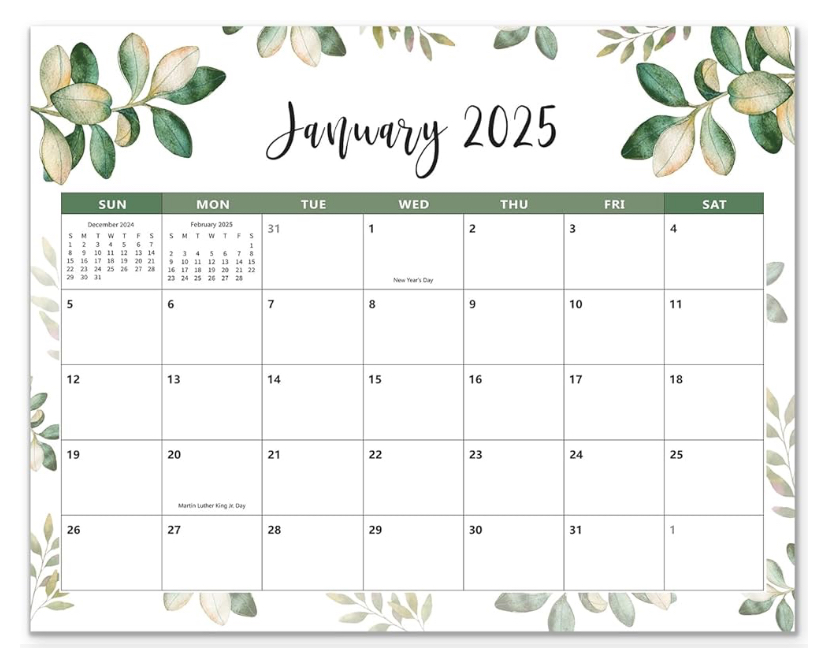
One of the most asked questions besides “What’s For Dinner?” at my house. My life is organized by a calendar. I have two that I use, one being my google calendar and the other being the calendar on my refrigerator. My google calendar is mainly for me because I get alerts about meetings, appointments and practices. The calendar on my refrigerator is for my family and it fills the need for them to ask me 20 questions about the schedule for the week. Originally, I had a wall calendar (nothing wrong with that) but I found the refrigerator is what is used the most and it is right there for everyone to see every time they open the refrigerator.
Being Your Child’s Best Advocate
A new school year is beginning which usually means a new teacher, new classroom routines, new expectations and sometimes new stressors and a little anxiety. What can you do to be your child’s best advocate and alleviate some of the stress that comes with a new school year? I believe it starts with relationships. Your child’s teacher will begin building a relationship with each student on the first day of school, but I believe it is important for you as a parent to begin to build that relationship with the teacher as well.
The Power of Greetings: It is the Little Things

I have realized over the years that students thrive when they are in an environment with established routines, clear expectations and a positive classroom culture. This is true for all the different roles in the school (classroom teacher, support staff, special area teachers and even administration). This may seem simple, but classroom management is one of the areas in which my mentees often ask for additional help.
The Pencil Problem

You know what I am talking about don’t you…
In a 4th grade classroom pencils disappear on a daily basis like snow when the sun comes up and the temperature rises, like snacks in my snack bowl when the clock strikes 9:30, like a piece of meat on the counter left unsupervised with a 90 pound German Shepherd in the house – well you get the idea.
IEP Team Work! Important Parent Contributions for a Positive Meeting

Now that you know what to expect at an IEP meeting, how can you contribute? Bring communication, kindness, and flexibility to support your IEP team.