By Shannon at the Southern Schoolhouse

Disclosure: This post may contain affiliate links, meaning we get a small commission if you decide to make a purchase through our links, at no cost to you.

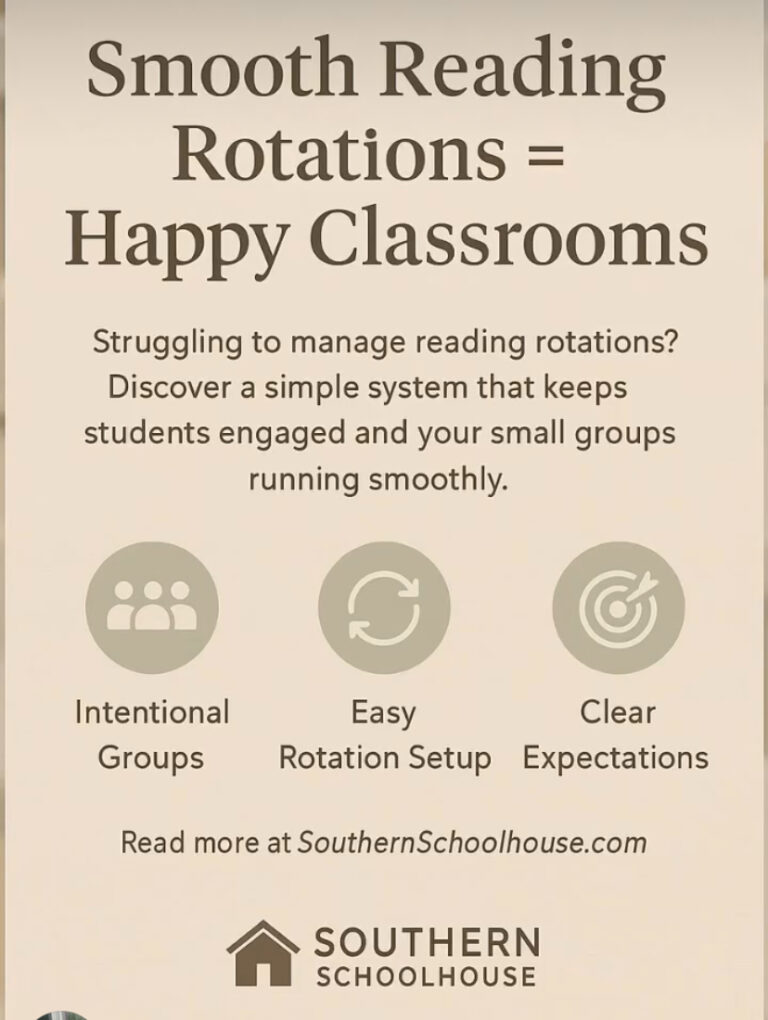
As I have mentored various mentees over the past few years, managing reading rotations and small groups in the classroom has been a recurring topic of conversation. Every teacher has different styles and ways to organize and manage their classroom. I’ve learned that routines and consistency do not always come easily. In this article, I will provide an example of how to structure and organize your daily reading rotations.

  1. Develop Intentional Groups – At some point, students will rotate to small groups with you, and you want them grouped by similar needs.
  2. Create a Simple Rotation System – This system should be easy for the students to understand (e.g., posted on a rotation chart or the Smartboard).
  3. Decide How the Students Will Rotate – Will they rotate through stations, or will each table have a basket containing all the materials needed for the rotations? Depending on the length of time, a movement break might be needed.
  4. Determine How Students Will Get Materials – Consider whether you want:
    • A box at each table for the group’s materials, or
    • A group leader who retrieves materials from a consistent space.
  5. Develop Clear and Concise Expectations – Be clear about what you want the classroom environment to look like during this time.
  1. At the Start of the Rotation – Allow students to review their rotation for the day and clarify any questions before proceeding.
  2. Assign a Group Member to Get Materials – Let one student obtain the material basket  for the group that day.
  3. Ensure Understanding of Independent Activities – Make sure students understand the independent activities you’ve planned for them. This will help prevent interruptions during your small group time.
  4. Provide Alternatives for Questions – Offer ways for students to get help without disrupting your group. For example:
    • Ask a group member for help, or
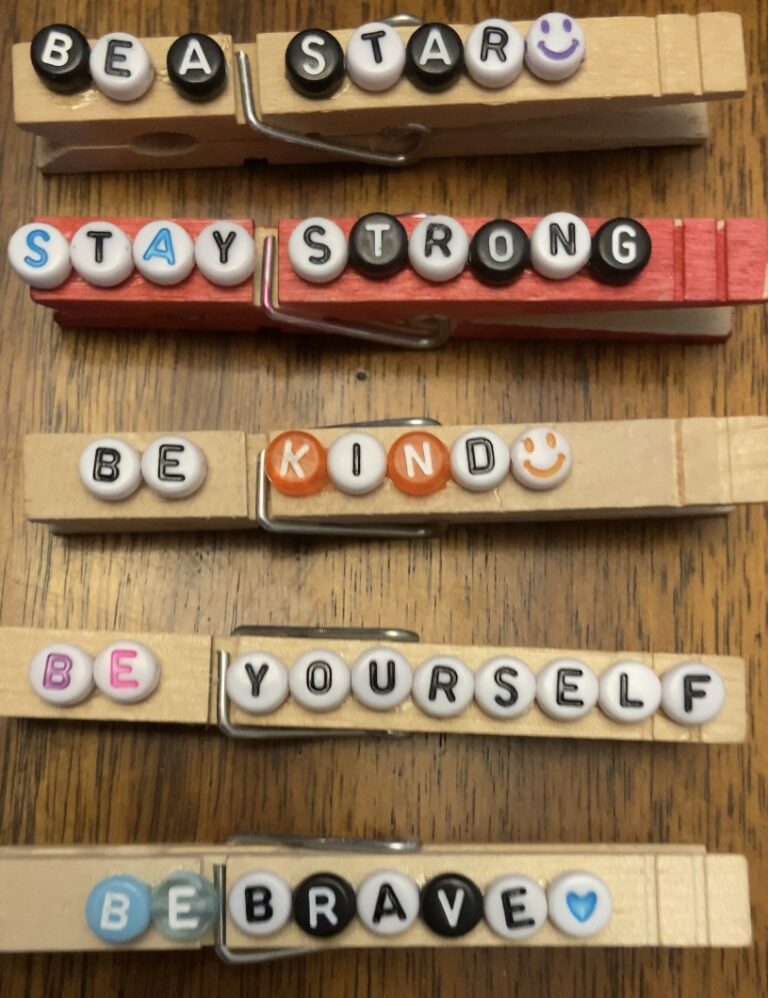
    • Use a clip system to indicate that they have a question.
  5. Prepare for Early Finishers – Ensure students have something to do if they finish an activity early. Ideas include:
    • A book basket beside their desk, or
    • A folder in their basket with an extra activity.

Modeling and practicing routines is especially important, depending on the grade level. This helps you tweak things that may not work as expected and allows students to see what is required of them. It’s one thing to hear instructions, but seeing them in action makes all the difference.

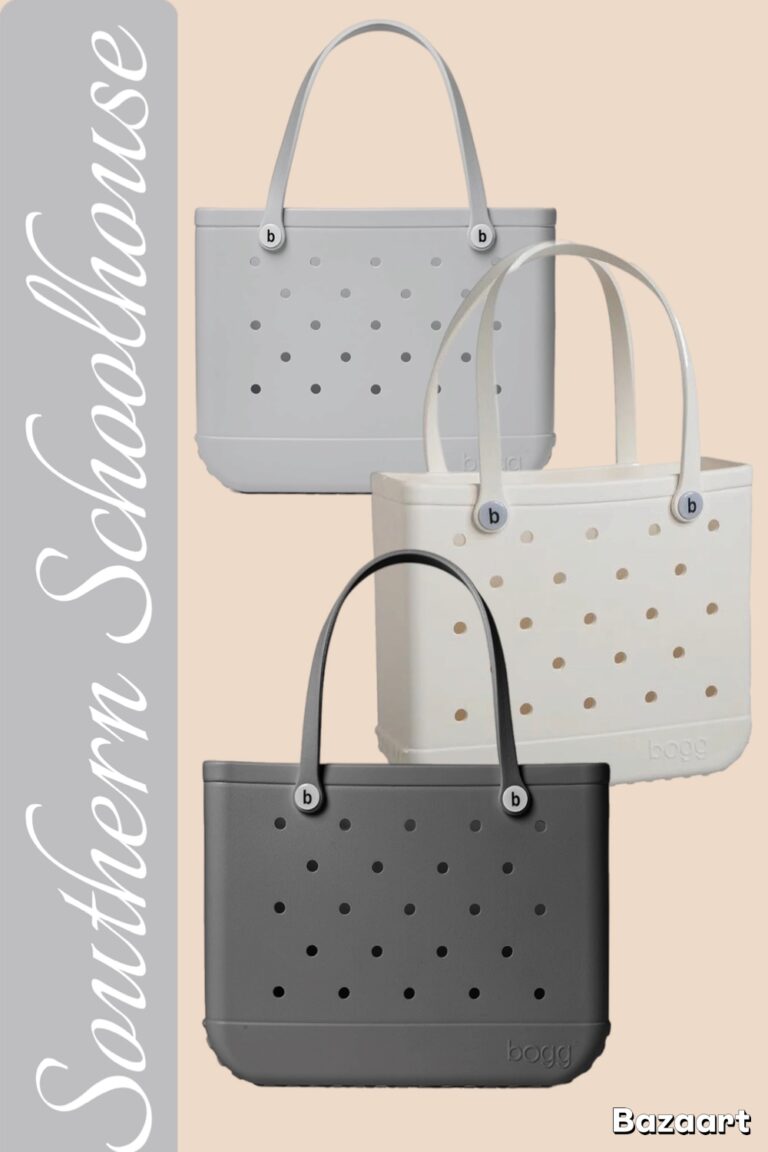
I have attached the group work baskets and book boxes that I like.  The baskets have handles and are big enough to hold folders for the different activities.  The book boxes are tall, firm and fit a good amount of books.  Both are different colors so the group can easily identify their color and grab and go. 
The January Teacher Slump: Why It Happens and How to Get Through It

January can feel heavier than expected. You return from winter break hoping for a fresh start, but…

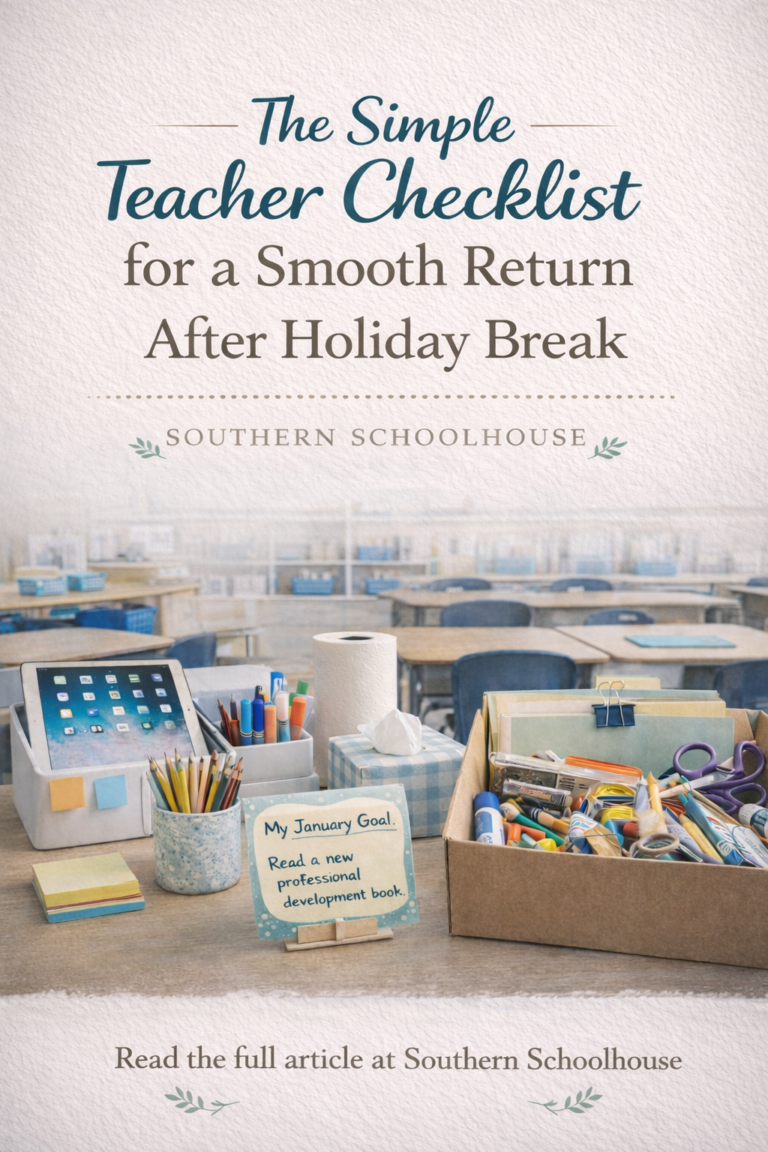
The Simple Teacher Checklist for a Smooth Return After Holiday Break

By Shannon at Southern Schoolhouse Two weeks may not seem like a long break, but even a short pause…

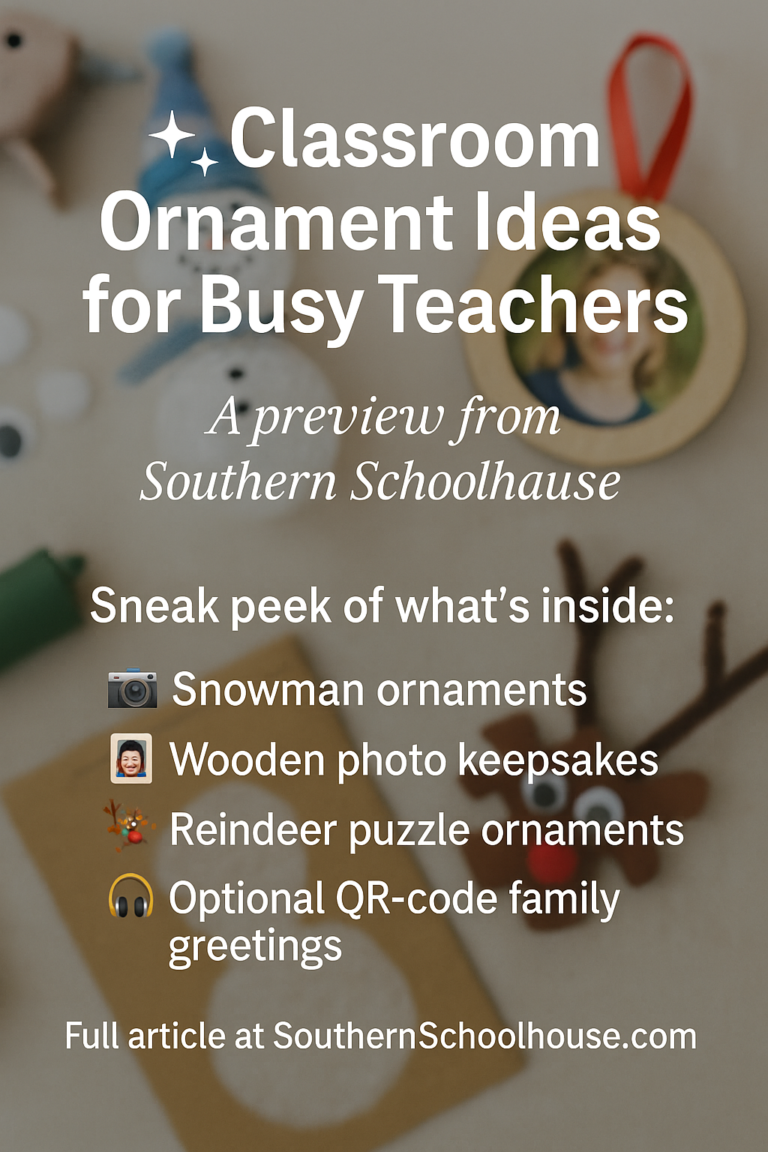
Easy Christmas Crafts for the Classroom

By Beth at the Southern Schoolhouse It’s that time of year again! We love giving our students a…

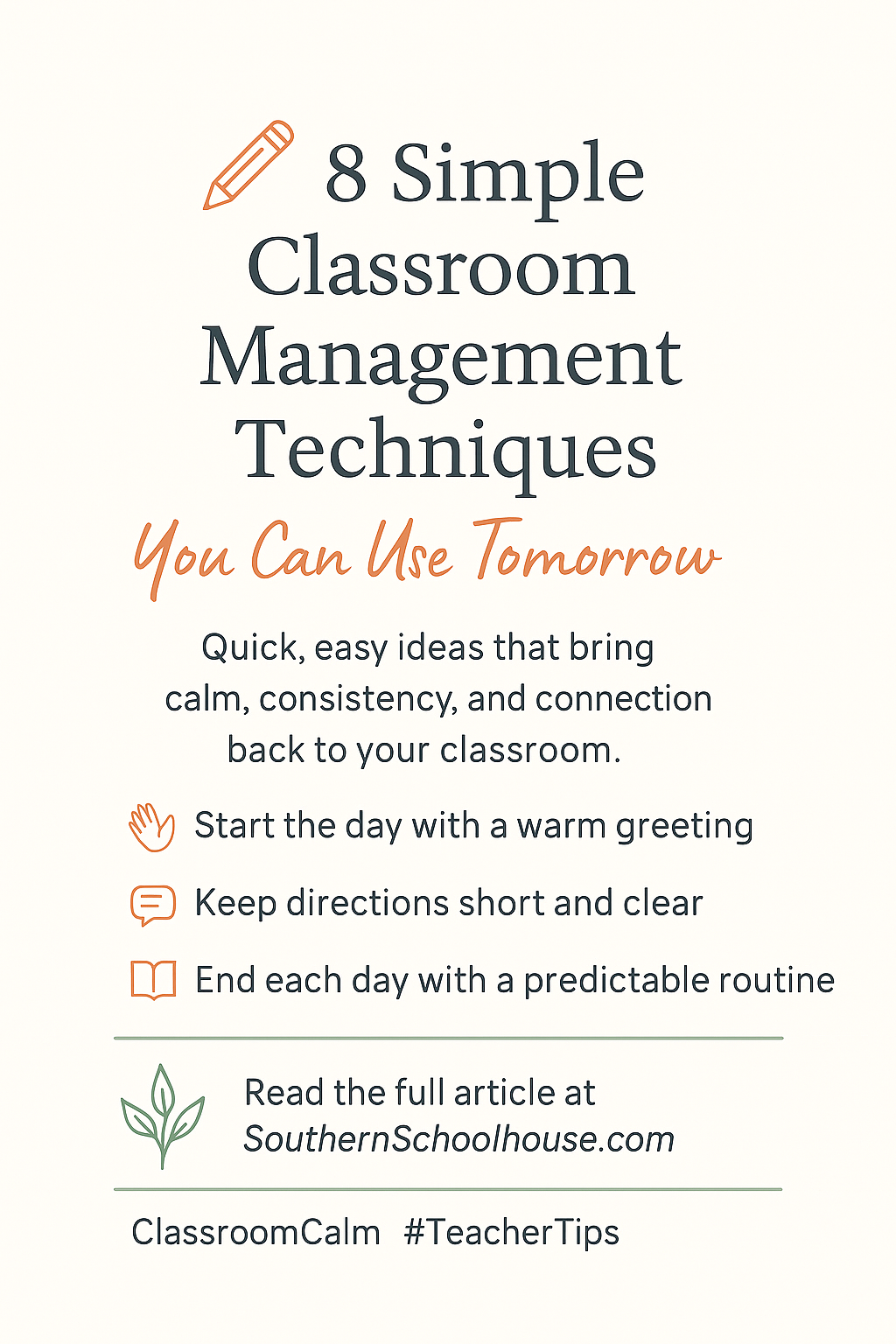
Simple Classroom Management Techniques That Make a Big Difference

Classroom management doesn’t have to mean complicated systems or endless behavior charts. Sometimes…

Practical Ways to Bring Social-Emotional Learning Into Your Classroom

Social-Emotional Learning (SEL) isn’t an “extra” to squeeze in, it’s a way to support both student…

Fantastic Focus Strategy to Help Students Without Constant Reminders

Sometimes students need just a little nudge to focus, but constantly redirecting them can disrupt…

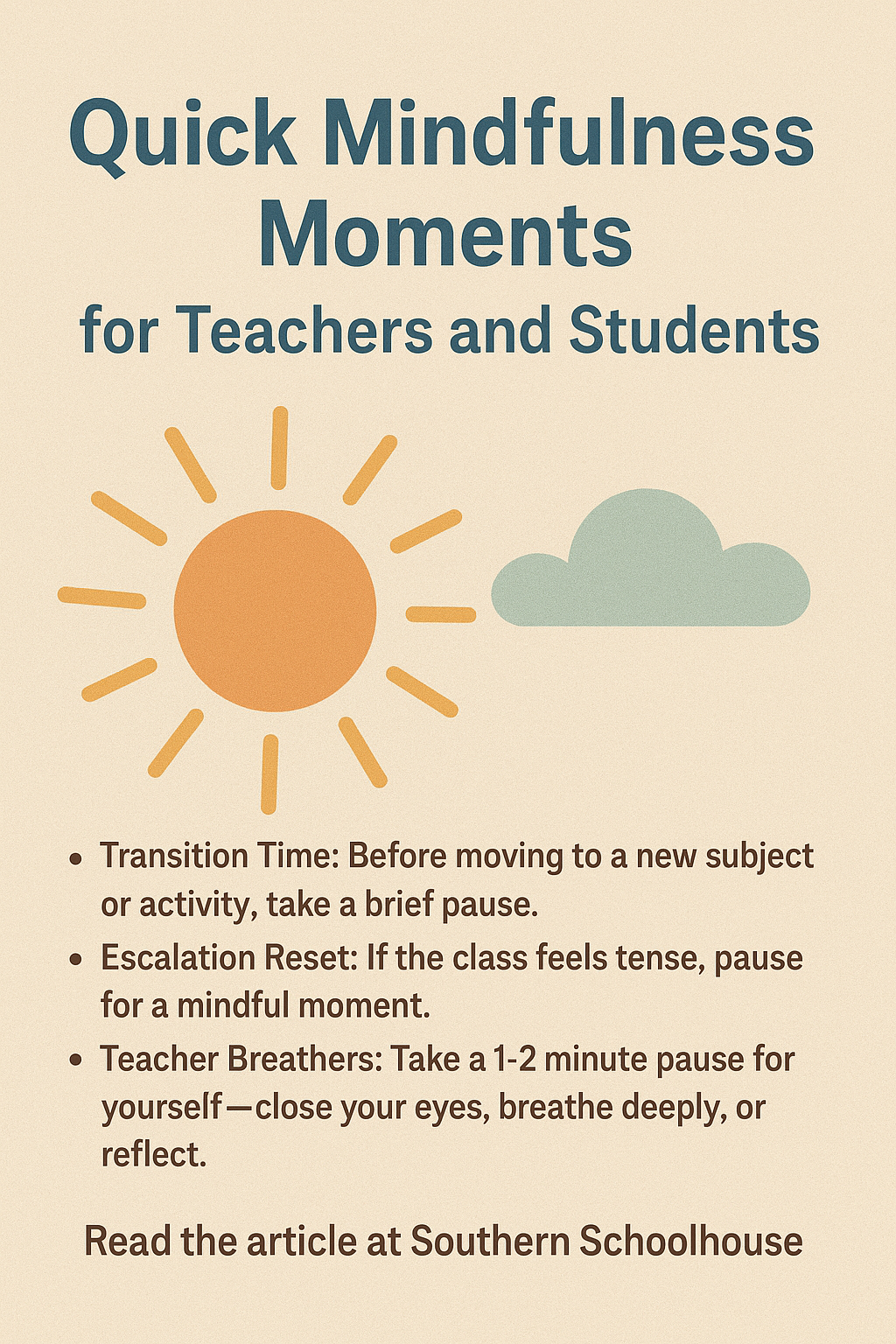
Part 2: Quick Mindfulness Moments for Teachers and Students

After helping first-year teachers reflect on stressful moments in their day, the next step is…

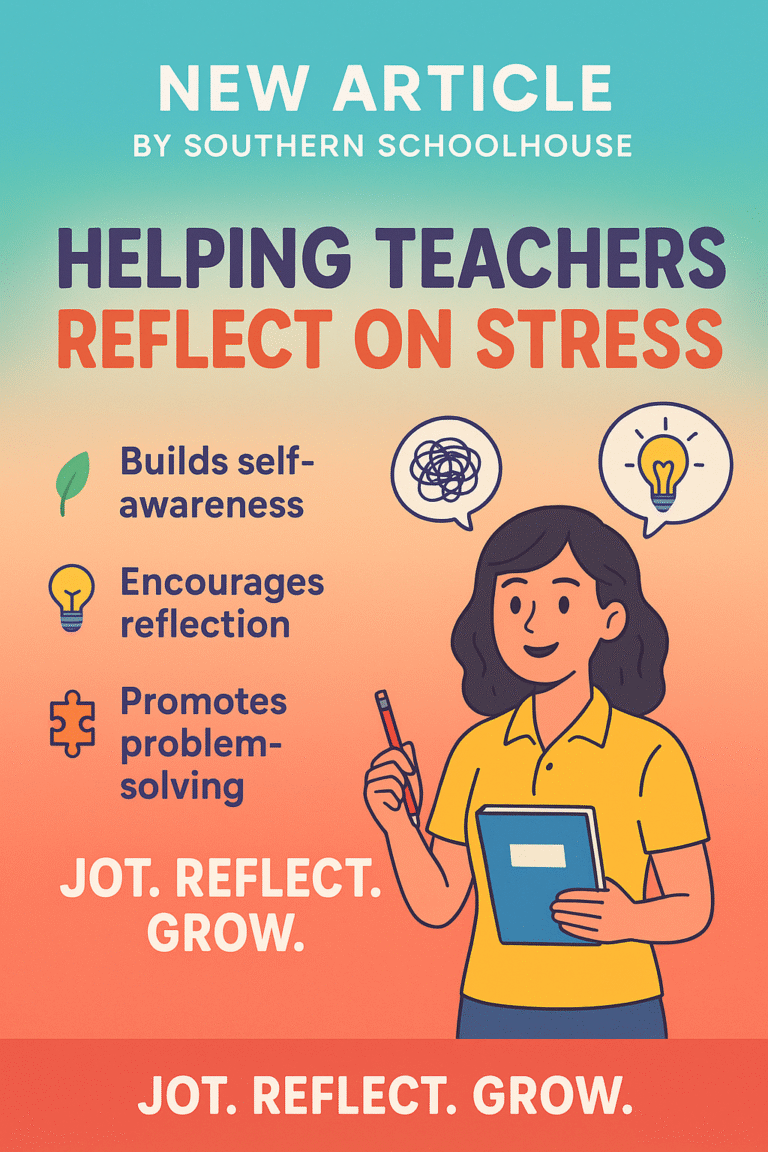
Helping Teachers Reflect on Stress: A Simple Strategy That Works

The first days of school can bring serious stress! Even prepared teachers feel stretched by…

How to Implement Consistent Work Boundaries

Our system is not designed for teachers to have a work life balance. Nevertheless, we are here in…

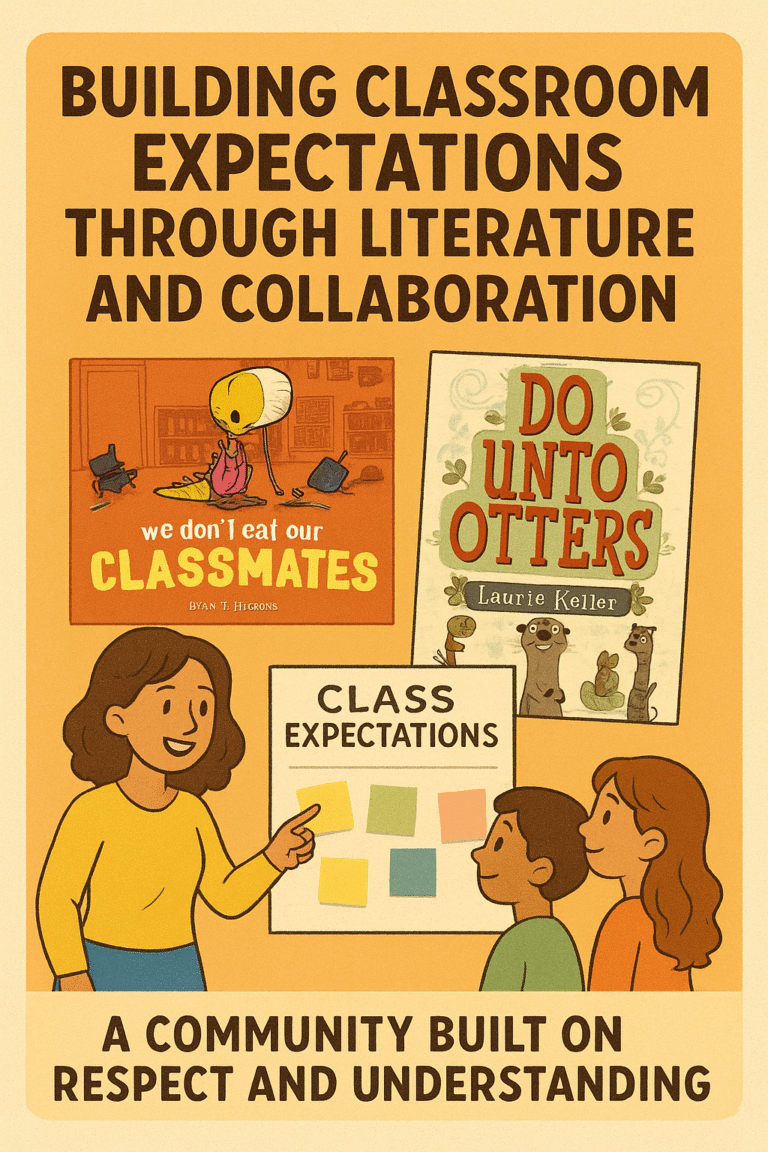
Setting the Stage for Success: Building Classroom Expectations Through Literature and Collaboration

The first day of school is the perfect opportunity to lay the foundation for a positive and…

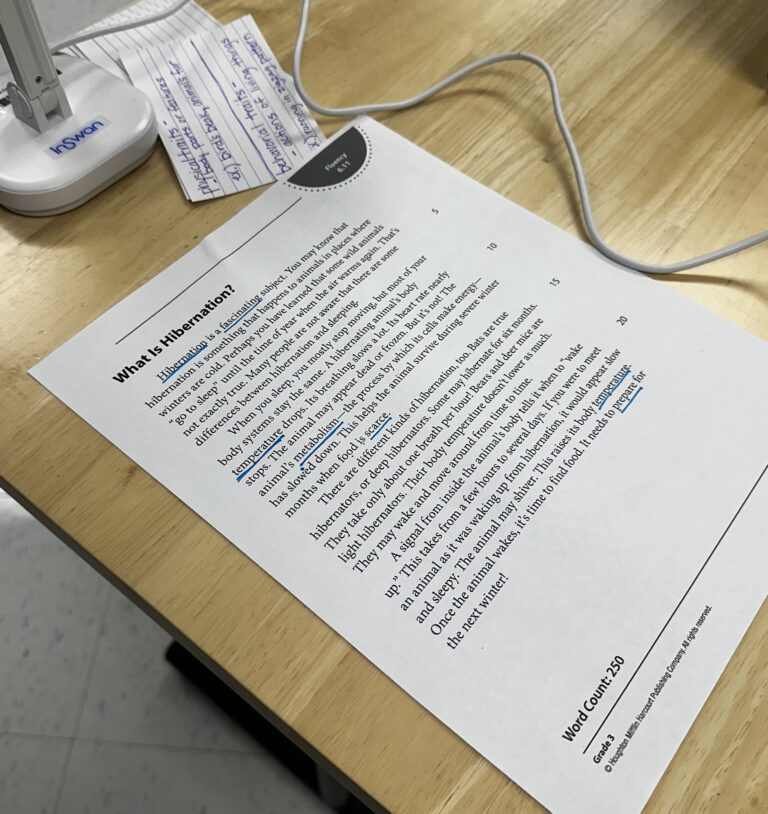
Building Strong Readers with a Weekly Fluency Routine 

A fluency routine is a great way to improve your students overall reading and comprehension. This…

Top 10 Budget Must Haves for the Special Education Classroom

If you are just starting out as a special education teacher and have limited cash (hah!) you can…

5 Innovative Activities to Create a Classroom Family

Kick off the school year with 5 simple peer connection ideas that help build trust, kindness, and…

Greatest Tote Ever! Bogg Bag and Accessories for Teachers

The Bogg Bag is a stylish, durable, and washable tote made for life on the go…

Easy Budget-Friendly Dry Erasers Using Extra Fabric

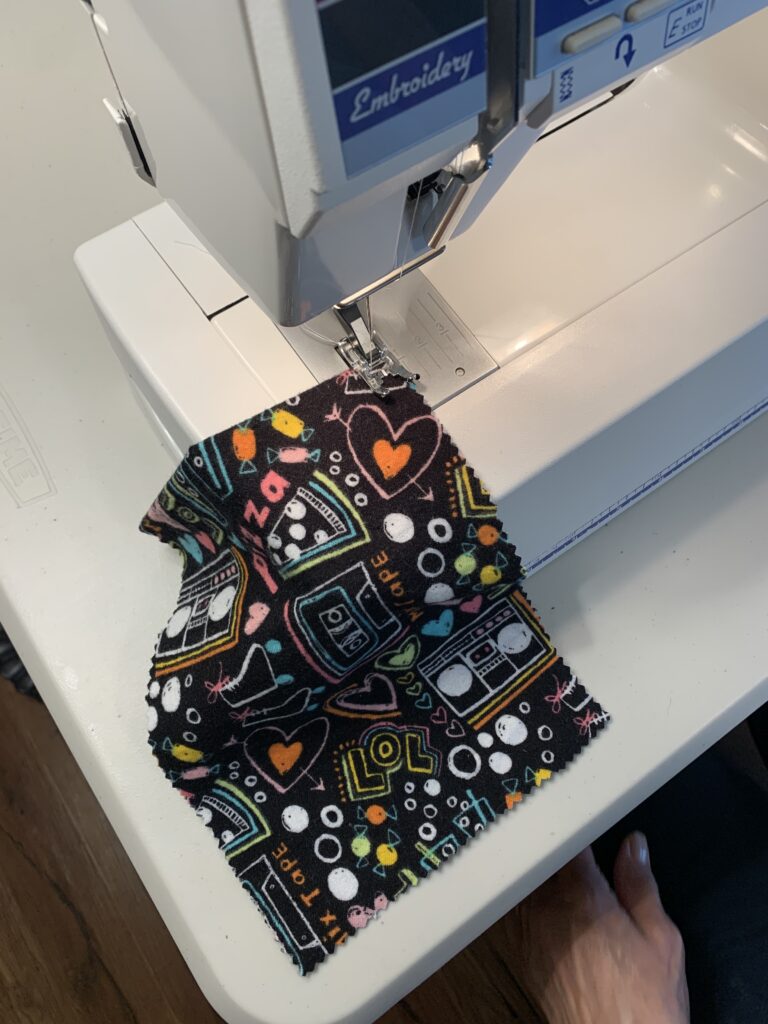
“No one is perfect, that’s why we have erasers” -Anonymous At Southern Schoolhouse, we love finding…

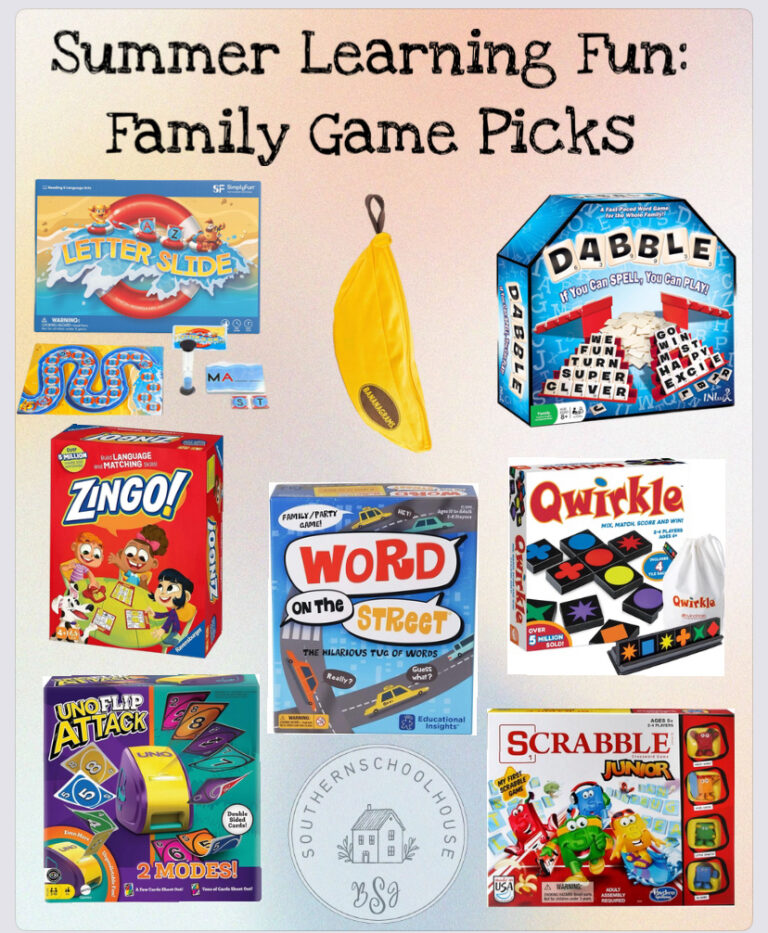
Terrific Educational Games That Work in the Home and Classroom

Growing up, many of us played classics like Chutes and Ladders, Monopoly, and Scrabble. While those…

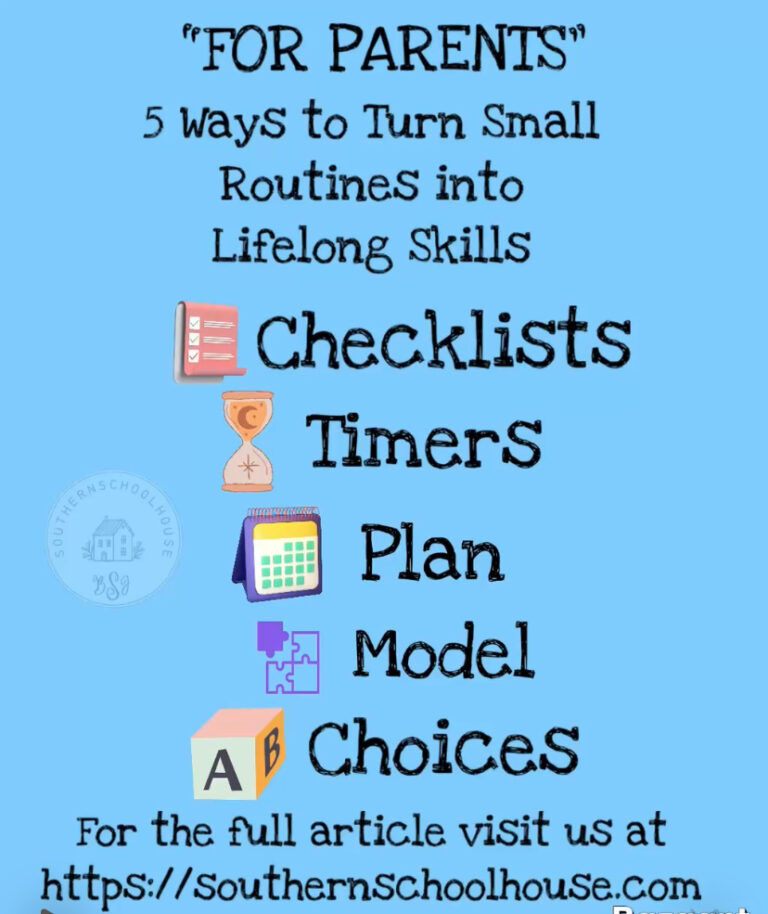
Little Routines, Big Skills: Executive Function for Everyday Life

I’m going to be honest here, I’m a very routine-oriented person, but looking back, I’m not sure I…

An Amazing POP of Fun for your Reading and Math

I have enjoyed using these POP games from Learning Resources! They fast-paced, hands-on games that…

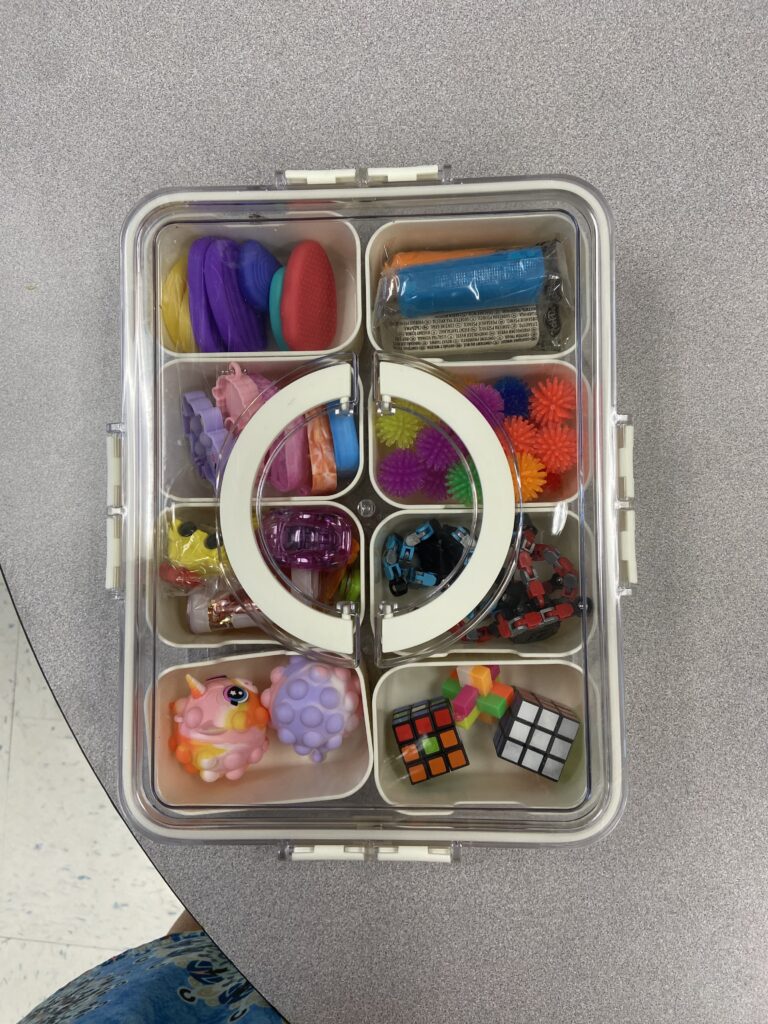
5 Creative Ways to Use the Snackle Box for Sensory Tools, Supplies, and More

These 6-section Ribbed Snackle Box with a lid and handle that have become so popular and I have…

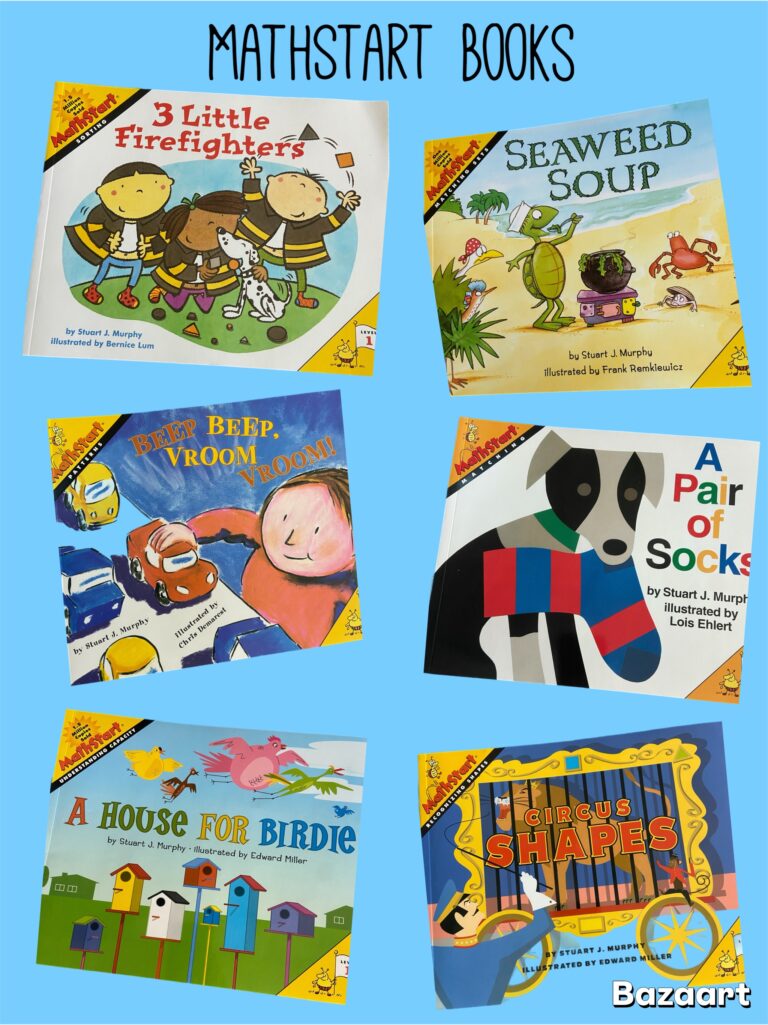
Turn Math into an Adventure with Math Start Books!

I use the Start Right books with my younger students to reinforce various math concepts, making…

Stress-Free Sub Plans: Easy Tips for a Smooth Classroom Takeover

A day off for a teacher is not easy. There is so much that goes into planning for a sub. This…

Top Tips for Substitutes to Ensure a Successful Day in the Classroom

Being a substitute is not easy. Unless you are completing a long-term sub position for a teacher…

Teaching Character Analysis-Tips and Resources

“The main character is NICE.” How many times have you received that response to a question about the…

Classroom Management – Start with the Small Stuff

Let me be honest – classroom management has never been my strong suit.  I am soft!  I admit it!  As…

Managing Reading Rotations and Small Groups: A Guide for Teachers

As I have observed and discussed with my various mentees over the past few years, managing reading…

“Playful Paths to Reading: Hands-On Early Literacy Activities”

Hands-on early literacy activities is all about making early literacy development fun, interactive…

Make Your Own Letter Formation Sand Tray and Letters

Prior to owning my  sand tray.  I used a plastic pencil box filled with a little salt or sand.  I…

How to Teach Letter Identification and Formation

Teaching letter identification and formation is a commonly taught skill in early grades and special…

Using Interactive Notebooks to Teach Reading and Writing

This is something new for me and I really love it!  Have I used reading and writing notebooks in the…

Math Made Fun: Unlocking Learning with Hands-On Tools

Over the past 5 years, I have obtained different hands-on math items that have supported the…

Mastering the Skill of Theme: Guiding Students to Deeper Understanding

I don’t ever remember a time that I couldn’t read.  I know that sounds like a stretch but I really…

The Pencil Problem

You know what I am talking about don’t you  In a 4th grade classroom pencils disappear on a daily…