By Shannon at Southern Schoolhouse
Every student struggles at some point, whether it’s staying on task, managing emotions, or navigating social situations. Instead of focusing on what’s not working, one of the most effective ways to support these students is to give them ownership through small, achievable goals.
Creating individualized daily goals helps students build confidence, develop self-awareness, and experience success in manageable steps. With consistency and encouragement, this strategy can help most students regulate behavior, build resilience, and learn important life skills.
Identify One Area to Target
Start by choosing one specific area the student finds challenging, such as recess behavior, work completion, or social interactions. Keeping the focus narrow increases the chance of success and avoids overwhelming the student.
Offer Goal Choices
Provide a small list of goals (four to five options) that fit the area of need. When students choose for themselves, they feel more ownership and motivation.
For example, during recess, goals might include:
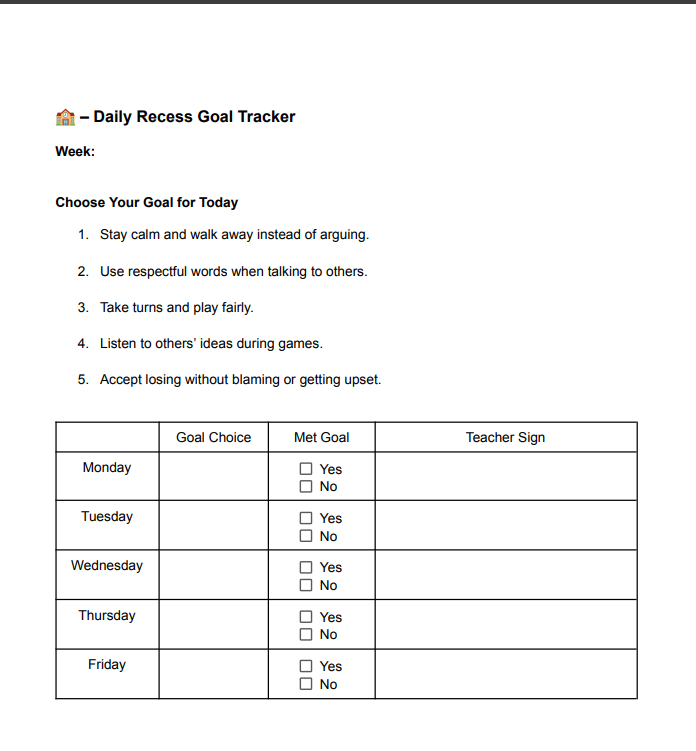
- I will take turns with others.
- I will use kind words.
- I will listen when an adult gives directions.
- I will walk away if I feel upset.
- I will include others in play.
Track Progress Simply
Use a visual tracker that’s easy to understand. This might be a goal sheet, sticker chart, or digital tracker. Each day, the student reviews the goal and reflects on progress with the teacher or case manager. The conversation builds accountability and trust.
Recognize Effort and Growth
A small incentive or check-in time can help reinforce positive progress. Rewards don’t need to be big, a few minutes of preferred activity, a positive note home, or a small treat can make a big difference. The focus should stay on effort and improvement, not perfection.
Reflect and Reset
At the end of the week, review what worked and what didn’t. Some students may be ready to set new goals, while others may need more time with the same one. Regular reflection builds self-awareness and persistence.
Personalized goal-setting is a simple yet powerful way to support students who struggle in different areas. It encourages them to take responsibility, reflect, and celebrate small wins along the way. Over time, these short-term goals can lead to lasting growth, not just in behavior, but in confidence and independence too.